Canada and the FIFA World Cup 2026: Canada is quietly becoming the smartest travel base for the FIFA World Cup 2026. Here’s your complete American fan guide — from tickets to cities, budgets to border crossings. author: worldfusiontours.com date: 2026 keywords: FIFA World Cup 2026, fifa world cup 2026 schedule, fifa world cup 2026 tickets, fifa world cup 2026 host country, FIFA World Cup 2026 groups, FIFA World Cup 2026 qualifiers
Canada and the FIFA World Cup 2026: The American Fan’s Complete Guide to Traveling North for the Biggest Football Event on Earth
Travel patterns are shifting. Smart fans are already planning. Here’s everything you need — cities, tickets, costs, schedules, and exactly what to expect when you cross the border.
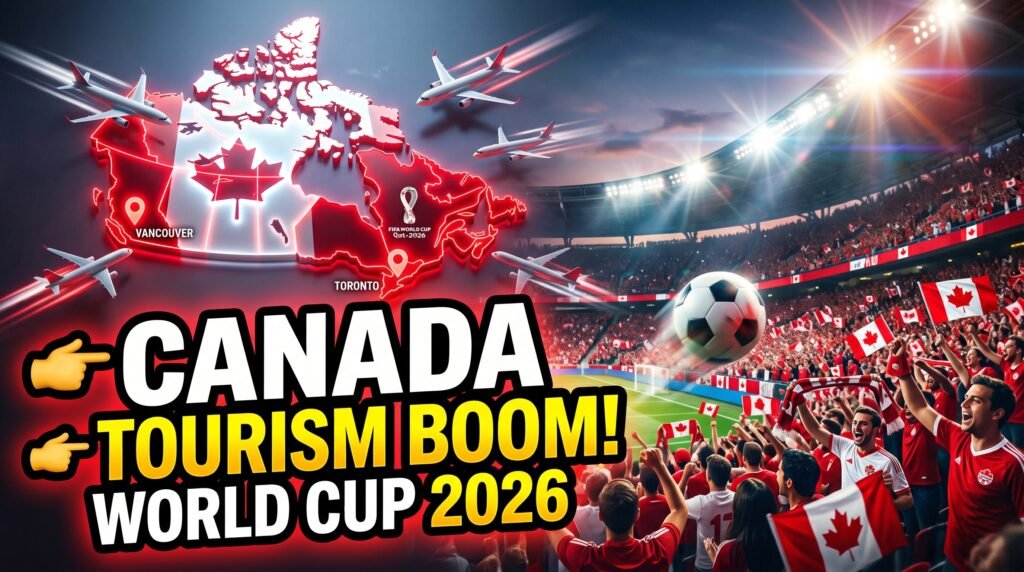
I want to tell you something that most travel sites aren’t saying loud enough: Canada is about to have its biggest tourism moment in modern history, and American fans who move fast are going to have the trip of a lifetime.
 34 Expert Caribbean Cruise Tips Every Cruiser Should Know Before You Set Sail
 Eastern vs. Western Caribbean Cruise: Which One Is Actually Right for You?
 Best Anniversary Trips in the USA: 15 Unforgettable Destinations That’ll Make You Fall in Love All Over Again
 Top 10 Places to Visit in the World That Will Ruin Every Other Trip (In the Best Way)
The FIFA World Cup 2026 is a joint tournament shared between the United States, Canada, and Mexico — and while American cities like New York, Los Angeles, and Dallas are getting most of the headlines, Vancouver and Toronto are quietly positioning themselves as two of the most exciting host cities on the entire continent. If you’re an American fan already thinking about the FIFA World Cup 2026 schedule, the FIFA World Cup 2026 tickets, and how to actually pull off a cross-border World Cup road trip, this guide is written specifically for you.
I’ve been tracking World Cup travel since 2014, and I’ll tell you straight: crossing into Canada for matches is one of the smartest moves an American football fan can make right now. Let me show you exactly why — and exactly how.
⚡ Quick Facts: FIFA World Cup 2026 in Canada
| Host Countries | United States, Canada, Mexico |
| Canadian Host Cities | Vancouver (BC Place) & Toronto (BMO Field) |
| Tournament Dates | June 11 – July 19, 2026 |
| Total Teams | 48 (expanded from 32) |
| Total Matches | 104 matches across all host cities |
| Currency | Canadian Dollar (CAD) — budget in USD, spend in CAD |
| Language | English & French |
| Visa for Americans | No visa required — passport only |
| Best Duration of Stay | 5–10 days minimum for full Canadian experience |
| U.S. Travel Advisory | Level 1: Exercise Normal Precautions |
Why Canada Stopped Me in My Tracks When I Saw the World Cup Map
When FIFA announced the FIFA World Cup 2026 host country setup — three nations, 16 host cities — I immediately pulled up a map and started thinking like a travel strategist, not just a fan.
Here’s what jumped out at me immediately: Vancouver and Toronto aren’t just host cities. They’re world-class metropolitan hubs that happen to sit right on the northern edge of American driving distance. Vancouver is a four-hour drive from Seattle. Toronto is a 90-minute flight from most major East Coast U.S. cities, or an 8-hour drive from New York City.
And here’s the kicker — because American eyes are laser-focused on U.S. cities, the travel competition for Canadian host cities is significantly lighter. That means hotel availability is better. Fan zones are less chaotic. The city energy around a tournament like this is still electrifying, but you’re not fighting 80,000 people for a restaurant table after the match.
I’ve been to tournaments in cities where you couldn’t get a cab for love or money after a match. Vancouver and Toronto have world-class transit, walkable fan districts, and the kind of multicultural food scene that makes extended stays genuinely exciting.
The other thing? Canada’s multicultural population means you’ll feel the tournament energy differently than anywhere else. Vancouver has massive South American, European, and Asian football communities. Toronto is one of the most diverse cities on the planet. The crowd energy in those stadiums is going to be something special.
Best Time to Visit Canada for the FIFA World Cup 2026
The tournament runs from June 11 to July 19, 2026 — which, honestly, is perfect timing for both Canadian cities. June and July in Vancouver and Toronto are two of the best travel months on the calendar.
| Month / Period | Weather in Vancouver | Weather in Toronto | Crowd Level | Best For |
|---|---|---|---|---|
| March–May 2026 | Cool, some rain, 48–62°F | Cold to mild, 35–60°F | Low | Pre-tournament scouting trips, cheap hotel rates, booking restaurants in advance |
| June 11–30 (Group Stage) | Mild & mostly dry, 62–70°F | Warm, 65–78°F | Very High | Group stage matches, fan fests, outdoor dining, waterfront walks |
| July 1–19 (Knockout Rounds) | Warm & sunny, 68–76°F | Hot & humid, 72–84°F | Peak / Extreme | Round of 16, quarterfinals, massive city celebrations, Stanley Park events |
| Post-Tournament (Late July) | Best summer weather, 70–78°F | Peak summer, 75–85°F | Moderate | Recovery travel, Niagara Falls day trips, wine country, outdoor hiking |
The honest truth: if you’re going for matches, you’re going during peak season and peak crowds. Plan your accommodation right now if you haven’t already. Prices are already climbing in both cities, and they will not come down before July 2026.
34 Expert Caribbean Cruise Tips Every Cruiser Should Know Before You Set Sail
Eastern vs. Western Caribbean Cruise: Which One Is Actually Right for You?
Best Anniversary Trips in the USA: 15 Unforgettable Destinations That’ll Make You Fall in Love All Over Again
Top 10 Places to Visit in the World That Will Ruin Every Other Trip (In the Best Way)
If you have flexibility, the sweet spot is arriving two days before your first match and leaving two days after your last one. That gives you time to actually experience the city instead of just sprinting between the stadium and your hotel.
The Canadian Host Cities: Everything You Need to Know About Vancouver and Toronto
🏟️ Vancouver — BC Place Stadium
Vancouver, British Columbia
Stadium: BC Place (capacity ~54,500) — Canada’s largest domed stadium, located right in the heart of downtown on False Creek.
Getting There from the U.S.: Direct flights from LAX, SFO, SEA, PDX, and most major western hubs. From Seattle, you can also drive — it’s about 140 miles (2.5–3 hours depending on border wait times). The border crossing at Peace Arch (Blaine, WA) is the main land entry point. Budget extra time during tournament weeks — waits can stretch to 90+ minutes.
Stadium Neighborhood: BC Place sits in Yaletown / False Creek — one of the most walkable and well-connected neighborhoods in Vancouver. Dozens of restaurants, bars, and fan gathering spots are within a 10-minute walk. The SkyTrain stops right nearby at Stadium-Chinatown Station.
Must-Do While You’re There: Stanley Park (a 1,000-acre urban park — bigger than Central Park), Granville Island Public Market, Gastown’s cobblestone streets, Kitsilano Beach for post-match relaxation, and the Capilano Suspension Bridge if you want to get out of the city for a few hours.
🏟️ Toronto — BMO Field
Toronto, Ontario
Stadium: BMO Field (capacity ~30,000 for football configuration, though temporary expansions may increase this) — located in Exhibition Place, on the western waterfront of Lake Ontario.
Getting There from the U.S.: Direct flights from JFK, EWR, BOS, PHL, ORD, MIA, ATL, and virtually every major U.S. hub. If you’re driving from Buffalo, NY, it’s only 95 miles — about 1.5–2 hours (plus border time). The Niagara Falls crossing at Peace Bridge (Buffalo–Fort Erie) is the most common land entry.
Stadium Neighborhood: Exhibition Place is on the waterfront near Liberty Village. The TTC (Toronto’s subway) connects you to the rest of the city easily. The King streetcar runs right through the Entertainment District into the heart of downtown.
Must-Do While You’re There: CN Tower (you basically have to), St. Lawrence Market (one of the world’s great food markets — go on a Saturday), Distillery District for craft beers and Instagram moments, Kensington Market for the gritty local vibe, and a day trip to Niagara Falls that every American fan should budget time for.
FIFA World Cup 2026 Schedule, Groups, and What Matches Are in Canada
The FIFA World Cup 2026 schedule across all 16 host cities is one of the most logistically complex sporting events ever organized. Here’s what you need to know specifically about Canada’s piece of the puzzle.
The Expanded 48-Team Format
This is the first World Cup with 48 teams competing, up from 32. That means more matches, more nations represented, and significantly more variety in the group stage. The FIFA World Cup 2026 groups will be announced closer to the tournament, but with 48 teams, you’re looking at 12 groups of 4 teams each in the group stage.
The FIFA World Cup 2026 Brackets and Knockout Rounds
The FIFA World Cup 2026 brackets expand the knockout rounds significantly. After the group stage, 32 teams advance to a Round of 32 (entirely new to this format), then Round of 16, quarterfinals, semifinals, and the final. The FIFA World Cup 2026 final is scheduled for July 19, 2026, at MetLife Stadium in East Rutherford, New Jersey — which, for American fans on the East Coast, is practically in your backyard.
FIFA World Cup 2026 Qualifiers — Who’s In?
The FIFA World Cup 2026 qualifiers have been one of the most-watched storylines heading into the tournament. With 48 spots available, qualification has opened up to nations that historically never made it.
The FIFA World Cup 2026 qualifiers table across all confederations shows some fascinating stories:
- CONCACAF (North/Central America & Caribbean): The three host nations — USA, Canada, and Mexico — qualify automatically.
- UEFA (Europe): Gets 16 spots, the largest allocation. Traditional powerhouses like France, Germany, Spain, Portugal, England, and Italy are virtually locks.
- CONMEBOL (South America): Gets 6 spots. Argentina (defending champions), Brazil, Uruguay, Colombia are expected.
- AFC (Asia): Gets 8.5 spots — a major expansion, opening doors for nations like Japan, South Korea, Saudi Arabia, Australia, and Iran.
- CAF (Africa): Gets 9 spots — also significantly expanded.
- OFC (Oceania): Gets 1 spot.
- Interconfederal Playoffs: 2 spots decided through cross-confederation playoffs.
The FIFA World Cup 2026 standings in each confederation’s qualifying competition have been closely watched — and there have already been some major surprises in the AFC and CAF qualifiers.
How to Get FIFA World Cup 2026 Tickets
Let me be direct here: FIFA World Cup 2026 tickets are one of the most competitive things you’ll ever try to buy in sports. The demand is genuinely extraordinary for a 48-team tournament with matches across three countries.
Official Ticket Sales
All official FIFA World Cup 2026 tickets go through FIFA’s official platform at FIFA.com. There are typically multiple sales phases:
- Ballot Phases: Random lottery-style sales where you register interest and are selected randomly — not first-come, first-served.
- First Come First Served Phases: These go fast. We’re talking minutes for premium matches.
- Hospitality Packages: Higher-priced packages that bundle tickets with premium experiences, often the most reliable way to guarantee access to high-demand matches.
How Much Will World Cup 2026 Tickets Cost?
Ticket pricing varies dramatically by match type and category. Based on historical FIFA pricing and announced plans:
| Match Type | Category 4 (Lowest) | Category 1 (Best Seats) |
|---|---|---|
| Group Stage | ~$70–$100 USD | ~$200–$350 USD |
| Round of 32 | ~$120–$150 USD | ~$350–$500 USD |
| Round of 16 | ~$180–$250 USD | ~$500–$750 USD |
| Quarterfinals | ~$300–$400 USD | ~$800–$1,200 USD |
| Semifinals | ~$500–$700 USD | ~$1,500–$2,500 USD |
| World Cup Final | ~$1,000+ USD | ~$3,000–$5,000+ USD |
On the resale market, expect 3x–10x face value for knockout round matches and anything involving major footballing nations.
How many tickets can you purchase? FIFA typically limits buyers to a maximum of 4 tickets per account per match for standard sales phases. Hospitality packages may have different limits.
Top 15 Things to Do and See During Your Canada World Cup Trip
Here’s where I get into the real substance — because a World Cup trip to Canada should be about way more than just the match days.
In Vancouver:
1. Stanley Park Seawall Walk The 5.5-mile paved seawall around Stanley Park is one of the great urban walks in North America. Do this on a non-match day morning. The views of the North Shore mountains from the seawall at sunrise are the kind of thing you’ll still be thinking about five years later.
2. Granville Island Public Market This covered market on False Creek is the antidote to every bad stadium food experience you’ve ever had. Go here the morning of a match day — fresh seafood, local cheeses, artisan breads, handmade chocolates. Build your own pre-match picnic.
3. Gastown Steam Clock Yes, it’s touristy. Yes, you should still go. The cobblestone streets of Gastown are genuinely beautiful, and the neighborhood has an excellent collection of craft cocktail bars and independent restaurants that deserve your money.
4. Capilano Suspension Bridge Park About 20 minutes from downtown Vancouver, this is 450 feet of suspension bridge over a canyon. Dramatic doesn’t cover it. Worth the $50-ish USD admission — and the crowds are manageable if you go on a weekday morning.
5. Grouse Mountain Take the Skyride gondola up to 3,700 feet. In June and July, you get wildflowers, hiking trails, grizzly bears (in an enclosed habitat), and panoramic views of the entire Lower Mainland. A full afternoon activity that feels genuinely Canadian.
6. Kitsilano Beach After a match — especially a hot July afternoon match — Kits Beach is the move. The outdoor pool is one of the largest in Canada, the beach is clean and safe, and the neighborhood behind it has excellent restaurants along 4th Avenue.
7. Whistler Day Trip Only 75 miles north of Vancouver on one of the most scenic drives in North America (the Sea-to-Sky Highway), Whistler in summer means mountain biking, hiking, and lake swimming. If you have a full day between matches, this is the perfect excursion.
In Toronto:
8. CN Tower EdgeWalk You’ve seen pictures. The EdgeWalk lets you walk around the outside of the tower at 1,168 feet. If you don’t do the walk, at least go to the observation deck — the view of Lake Ontario on a clear day stretches to Niagara Falls.
9. St. Lawrence Market Open since 1803, this is genuinely one of the world’s great food markets. The peameal bacon sandwiches from Carousel Bakery are a Toronto institution — you need to eat one before you leave.
10. Distillery District A Victorian-era industrial complex turned arts, culture, and entertainment hub. Beautiful brick architecture, excellent craft breweries, gallery spaces, and the kind of festive atmosphere during World Cup that turns a Tuesday afternoon into something memorable.
11. Kensington Market This is the real Toronto — multicultural, chaotic in the best way, with food from every corner of the world compressed into a few dense blocks. Exactly the kind of place that reminds you why the World Cup works so well in this city.
12. Toronto Islands Ferry A 13-minute ferry ride gets you to the Toronto Islands — a car-free cluster of islands with beaches, bike rentals, and one of the best skyline views you’ll find anywhere. Perfect for a relaxed half-day between matches.
13. Royal Ontario Museum (ROM) If you want a break from the football energy, the ROM is one of North America’s great natural history and world culture museums. The Crystal addition to the building is architecturally striking on its own.
14. Niagara Falls Day Trip Only 90 minutes from Toronto, this is non-negotiable for first-time visitors. The Maid of the Mist boat ride puts you close enough to feel the spray. Go on a weekday — weekends during summer are mobbed.
15. Toronto’s Waterfront and Harbourfront Centre The renovated waterfront along Lake Ontario is a major public gathering space. During the World Cup, expect this area to host fan fests, outdoor screenings, and events. Walk it at night — the city lights reflecting off the lake are unexpectedly stunning.
Where to Stay, Eat, and Get Around in Canada’s World Cup Cities
Where to Stay
In Vancouver:
- Yaletown / False Creek: Best location for BC Place access. Walk to the stadium, walk to restaurants, walk to SkyTrain. Hotels in this area include the Opus Hotel (boutique, design-forward) and the Marriott Pinnacle Downtown.
- Downtown / West End: Slightly more affordable than Yaletown, still excellent transit access, close to Robson Street shopping.
- North Shore (North Vancouver): For fans who want a quieter base — connected to downtown by SeaBus ferry. Often 20–30% cheaper than downtown options during events.
In Toronto:
- Entertainment District / King West: Best for nightlife and walking to BMO Field. The Thompson Hotel and Le Germain are excellent upscale options.
- Downtown Core / Bay Street: Business district hotels often have good availability on weekends when corporate travel dips.
- Leslieville / East End: Up-and-coming neighborhood, more affordable, excellent food scene, 15-minute transit ride to the stadium.
Where to Eat
Vancouver can’t-miss spots:
- Vij’s (Indian-influenced cuisine) — one of Canada’s most celebrated restaurants, near Granville Street
- Miku (upscale Japanese aburi sushi) — waterfront location, perfect for a pre-match special dinner
- Hawksworth (fine Canadian cuisine inside the Hotel Georgia) — splurge-worthy
- The Birds & The Beets (Gastown, casual, excellent brunch)
- Hon’s Wonton House (budget-friendly, authentic, a Vancouver institution for decades)
Toronto can’t-miss spots:
- Canoe (70th floor, Canadian cuisine, skyline views — reserve months ahead)
- Pai Northern Thai Kitchen (casual, incredibly good, long lines — worth it)
- Bar Isabel (Spanish-influenced, perfect for tapas before a night match)
- Banh Mi Boys (quick, cheap, perfect for a match day lunch)
- Carousel Bakery in St. Lawrence Market (the peameal bacon sandwich — just do it)
Getting Around
Vancouver Transit: The SkyTrain system is clean, frequent, and covers the key tourist areas. BC Place is at Stadium-Chinatown Station on the Expo and Millennium Lines. A day pass costs around $11 CAD (~$8 USD) and covers unlimited travel.
Toronto Transit: The TTC subway covers the main corridors, supplemented by an extensive streetcar network. A day pass is around $13 CAD (~$9.50 USD). For BMO Field, take the Gardiner Expressway if driving or the King streetcar (#504) to Exhibition Loop — it drops you within a 5-minute walk of the gates.
Renting a Car: Not necessary within either city, but excellent for day trips (Sea-to-Sky Highway in Vancouver, wine country in Niagara for Toronto). Book through major U.S. rental companies with your existing insurance — most U.S. auto insurance policies cover Canadian rentals, but verify with your provider before you go.
Pro Tips and Common Tourist Mistakes to Avoid
- Notify your bank before traveling — U.S. cards frequently trigger fraud alerts at Canadian POS terminals.
- Download the Google Translate app with French downloaded offline — you’ll need it in some parts of Montreal and Quebec, and in portions of bilingual signage in Toronto.
- Tipping culture in Canada mirrors the U.S. — 15–20% is standard at sit-down restaurants.
- Canada has strict restrictions on certain firearms and medications — check the U.S. State Department’s Canada travel advisory page for current guidance before you pack.
Budget Breakdown: What an American Fan Should Actually Expect to Spend
All amounts are in USD, assuming you’re exchanging at roughly 1 USD = 1.35 CAD (rates fluctuate — check before you go).
| Expense Category | Budget Traveler | Mid-Range | Premium |
|---|---|---|---|
| Flight (round-trip from major U.S. city) | $200–$350 | $400–$600 | $800–$1,500+ |
| Hotel (per night) | $90–$130 | $160–$280 | $350–$700+ |
| Group Stage Match Ticket | $70–$100 | $150–$250 | $300–$500+ |
| Food (per day) | $30–$50 | $60–$100 | $120–$200+ |
| Local Transit (per day) | $8–$12 | $12–$20 | $25–$60 (taxi/rideshare) |
| Activities & Attractions (per day) | $15–$30 | $40–$80 | $100–$200+ |
| Souvenirs & Miscellaneous | $50–$100 | $150–$300 | $400+ |
| 5-Day Trip Total (estimated) | $900–$1,400 | $2,000–$3,500 | $5,000–$10,000+ |
The honest truth: the FIFA World Cup 2026 tickets themselves are often not the biggest line item — accommodation is. If you locked in hotel rates 18 months ahead, your cost structure looks completely different than if you’re booking six weeks out.
One money-saving move that works: book an Airbnb in a neighborhood 15–20 minutes from the stadium and use transit. You’ll save 40–60% on accommodation compared to stadium-adjacent hotels during World Cup weeks.
How to Plan Your Canada World Cup 2026 Itinerary
Here’s a sample 7-day framework that works for an American fan hitting one Canadian city with possible match flexibility.
Sample 7-Day Vancouver World Cup Itinerary
Day 1 — Arrival & Orientation
Fly into YVR, take the Canada Line SkyTrain to downtown (25 min, $4.25 CAD). Check in, then walk Gastown to get your bearings. Dinner in Yaletown — the neighborhood is buzzing with early tournament arrivals. Early night; jet lag is real.
Day 2 — Match Day 1
Granville Island Public Market in the morning — build a picnic breakfast, take in the harbor. Stadium-Chinatown SkyTrain to BC Place for your match. Post-match drinks on the False Creek waterfront. The fan atmosphere along the seawall after a match is genuinely electric.
Day 3 — Stanley Park & Capilano
Full morning at Stanley Park — rent a bike and do the seawall loop. Afternoon at Capilano Suspension Bridge or Grouse Mountain. Dinner in Kitsilano on 4th Avenue — try Rangoli (Vij’s casual sister restaurant) if you can get in.
Day 4 — Whistler Day Trip
Rent a car or book a shuttle (multiple companies run daily Whistler service from downtown Vancouver for ~$60–80 USD round trip). Sea-to-Sky Highway is the drive. Spend the day mountain biking or hiking in Whistler Blackcomb. Back by evening.
Day 5 — Match Day 2 & Fan Fest
Hit the FIFA Fan Fest location (to be announced closer to the tournament — likely at a major waterfront or event venue near downtown). Atmosphere, food stalls, live music. Match day evening at BC Place. Walk the neighborhood after the game.
Day 6 — North Shore & Deep Cove
Take the SeaBus to North Vancouver (12 minutes, scenic). Rent a kayak at Deep Cove and paddle Indian Arm — one of the genuinely beautiful things you can do within 45 minutes of downtown Vancouver. Lunch at the Deep Cove Chalet or grab a cinnamon bun at the Deep Cove Honey Bakery (locals will know).
Day 7 — Departure Day & Final Exploration
Morning at Robson Street for any last shopping. Quick stop at Vancouver Art Gallery if it opens with World Cup programming. YVR via Canada Line. Home with a lot of stories.
Messi, Ronaldo, and the Star Power Coming to the FIFA World Cup 2026
No World Cup preview is complete without addressing the questions everyone is actually Googling.
Will Messi Play in the 2026 World Cup?
This is the most-searched question related to the tournament. Lionel Messi, who turned 38 in June 2025, has not officially confirmed his plans for 2026. At the 2022 World Cup in Qatar, he won his first — and Argentina’s third — World Cup title. The 2026 tournament represents a realistic final chapter for one of the sport’s greatest careers.
The honest answer: it depends on his form, fitness, and personal decision. His Inter Miami career has extended his playing days, and he’s shown no signs of physical decline that would rule him out. Argentina’s coach and federation would clearly want him available. But at 38, playing a full tournament is no guarantee.
Can Ronaldo Play the 2026 World Cup?
Similarly, Cristiano Ronaldo — who turned 41 in February 2026 — would be the oldest outfield player ever to play in a World Cup if Portugal selects him. Playing in his current capacity in Saudi Arabia’s Al-Nassr has kept him match-fit, but his international future is a live question. Can Portugal qualify for the World Cup 2026? Portugal is one of Europe’s strongest nations and should comfortably qualify through UEFA’s expanded allocation.
Whether Ronaldo is in that squad at 41 will be one of the defining narratives of the tournament.
Why Did Messi Reject the Reported $1.5 Billion Deal?
Reports of a massive Saudi league offer to Messi circulated widely. His choice of Inter Miami over Saudi Arabia came down to stated priorities around lifestyle, family, and his love of MLS and American football culture — not purely financial calculations. The reported package made headlines, but the reasoning behind his decision was about more than money.
Who Is Better, Messi or Yamal at 17?
Lamine Yamal’s emergence as Spain’s generational talent has sparked endless comparison debates. At 17, Yamal was instrumental in Spain’s UEFA Euro 2024 title. Messi’s own record at 17 was extraordinary — by that age he’d already broken into Barcelona’s first team. The comparison is genuinely intriguing and will fuel debate all the way through 2026.
India, South Asian Football, and the 2026 World Cup Story
Several of the most-searched questions around this tournament come from South Asian football fans, so let me address them clearly.
Can India Qualify for the FIFA World Cup 2026?
India’s FIFA ranking and current results through AFC qualifying make direct qualification for the FIFA World Cup 2026 extremely unlikely. The AFC has 8.5 spots available (up significantly from previous tournaments), but India would need to dramatically outperform their recent qualifying record.
Why Did FIFA Suspend India?
FIFA suspended the All India Football Federation (AIFF) in August 2022 due to third-party interference in AIFF affairs — a violation of FIFA’s statutes on government interference in football federations. The suspension was lifted relatively quickly after the situation was resolved, but it highlighted ongoing governance challenges in Indian football.
Will Sunil Chhetri Play in FIFA 2026?
Sunil Chhetri, India’s all-time leading goalscorer and a genuine legend of Asian football, retired from international football in 2024. He will not be part of any potential Indian squad for 2026.
Is the Indian Football Team Qualified for FIFA 2026?
As of current standings, India has not qualified and faces significant obstacles to do so. Fans of Indian football should check the official AFC qualification standings for the most current picture.
Who Is the Richest Footballer in India?
Sunil Chhetri held the highest commercial value in Indian football for many years. The next generation of Indian players is still developing the commercial profile that international tournament exposure creates. For current rankings, sports finance publications in India would have the most up-to-date figures.
Is Virat Kohli in the World Cup 2026?
No — Virat Kohli is a cricket player, not a footballer. The 2026 FIFA World Cup is a football (soccer) tournament. Different sport entirely.
Frequently Asked Questions About Canada and the FIFA World Cup 2026
How much will World Cup 2026 tickets cost?
Group stage tickets start at approximately $70–$100 USD for the lowest category seats, with premium Category 1 seats running $200–$350. Knockout round tickets escalate significantly, with quarterfinals potentially reaching $1,200+ and the final commanding $3,000–$5,000+ through official channels. Resale market prices will be considerably higher for high-demand matches.
What is the cheapest World Cup 2026 ticket price?
FIFA typically offers Category 4 tickets for group stage matches at the lowest price tier — historically around $50–$100 USD. These are real seats, not obstructed views, but they’re the farthest from the pitch in the upper tiers. They’re also the hardest to get in ballot phases because they’re the most popular option.
How many tickets can I purchase for the World Cup 2026?
FIFA standard policy limits purchases to a maximum of 4 tickets per account per match. This applies per registered account — household accounts linked to the same address may face additional restrictions. Always buy through FIFA’s official portal or their verified resale partner to avoid fraud.
How many countries are in the FIFA World Cup 2026?
The FIFA World Cup 2026 will feature 48 national teams — the largest tournament field in World Cup history, expanded from the traditional 32-team format. This creates a new Round of 32 in the knockout stage and significantly increases total matches to 104.
Do Americans need a visa to visit Canada for the World Cup?
No visa is required for U.S. citizens visiting Canada. You need a valid U.S. passport (not just a driver’s license) at land and air border crossings. NEXUS card holders can use expedited crossing lanes. Border wait times during World Cup weeks at land crossings may be significantly elevated — plan accordingly.
What’s the best way to get from Vancouver to Toronto during the tournament?
Flying is by far the most practical option — flights between YVR and YYZ run about 4.5–5 hours and cost $150–$400 CAD depending on advance booking. The cross-country drive (about 2,700 miles) is a bucket-list road trip but not practical during a tournament with match schedules to keep. Book flights well in advance if you’re planning to attend matches in both Canadian cities.
Is Canada safe for American solo travelers during the World Cup?
Canada consistently ranks among the safest countries in the world for international travelers. Vancouver and Toronto are both major, well-policed metropolitan cities with excellent emergency services. The U.S. State Department maintains a Level 1 (Exercise Normal Precautions) advisory for Canada — the lowest possible warning level. Exercise the standard common sense you’d apply in any major city.
Planning Resources and Official Links
Before you finalize your trip, bookmark these:
Final Thoughts From a Fellow Fan
The FIFA World Cup 2026 is going to be one of the greatest sporting events this continent has ever hosted — and Canada’s role in it deserves far more attention than it’s getting right now.
Vancouver and Toronto aren’t consolation prizes compared to New York and Los Angeles. They’re world-class cities with their own irreplaceable character, extraordinary food scenes, and the kind of multicultural football energy that makes a World Cup feel genuinely global rather than just a local party.
If you’re an American fan and you haven’t started planning your Canada portion of this tournament, start now. The hotels are filling. The ticket ballots are coming. The cross-border logistics take more time to figure out than people expect.
But when you’re standing on the False Creek waterfront after a match, watching fans from a dozen countries celebrate under the North Shore mountains — or sitting in St. Lawrence Market on a Saturday morning with a peameal bacon sandwich the morning after a Toronto win — you’ll understand exactly why this trip was worth every bit of the planning.
Book it. Plan it. Go.
This article was written for worldfusiontours.com — your source for expert travel planning and destination guides.