Red Beans and Rice Recipe : There is a pot sitting on someone’s stove in New Orleans right now, and it smells like Monday. That is not a coincidence. Red beans and rice has been the unofficial meal of Monday in Louisiana for over two centuries — traditionally cooked while the laundry was done, since both required hours of slow simmering without much fuss.
This red beans and rice recipe is the real thing. No shortcuts, no canned shortcuts that rob the dish of its depth, and no apologies for the time it takes. Because this dish rewards patience in a way that almost nothing else in the kitchen does.
If you have never made it from scratch, you are about to understand why people get deeply sentimental about this meal.



What Makes This Red Beans and Rice Recipe Special
The first time I made red beans and rice, I undercooked the beans and over-seasoned the sausage. The result was chalky, salty, and somehow still completely addictive. I made it again the next week. And the week after that. It took me about six tries before I hit the version I am sharing with you now.
What separates a truly great red beans and rice from a forgettable one comes down to three things: the holy trinity, the smoked sausage, and time.
The holy trinity — onion, celery, and bell pepper — is the aromatic backbone of Creole and Cajun cooking. When you cook it low and slow in a little fat before adding anything else, those three vegetables transform into something sweet, savory, and deeply fragrant.
The smoked sausage, traditionally andouille, brings a smoky, peppery richness that seeps into every bean as it cooks. Using a high-quality sausage here is not optional. It is the difference between a bowl of beans and a bowl of beans you dream about.
And time? There is no substitute. The slow simmer allows the beans to break down naturally, releasing their starches and creating that thick, creamy, almost velvety consistency that makes red beans and rice so satisfying.
What is your earliest memory of eating red beans and rice? Was it homemade or from a restaurant? I would love to hear about it in the comments.
Red Beans and Rice Recipe Quick Facts
| Detail | Info |
|---|---|
| Prep Time | 15 minutes (plus overnight soaking) |
| Cook Time | 2.5 to 3 hours |
| Servings | 6 to 8 |
| Difficulty | Easy |
| Cuisine | Creole / Southern American |
| Estimated Calories | 480 per serving (with rice) |
Red Beans and Rice Recipe Ingredients You Will Need
This red beans and rice recipe uses pantry staples that are easy to find at any grocery store. The only ingredient worth hunting down is a good andouille sausage — it makes a noticeable difference.
| Ingredient | Quantity | Notes or Substitutes |
|---|---|---|
| Dried red kidney beans | 1 pound | Soak overnight; do not use canned |
| Andouille sausage | 12 oz | Smoked kielbasa or smoked sausage works too |
| Yellow onion | 1 large | Diced fine |
| Celery stalks | 3 stalks | Diced fine |
| Green bell pepper | 1 large | Diced fine |
| Garlic cloves | 5 cloves | Minced; do not use garlic powder |
| Chicken stock | 4 cups | Low-sodium preferred; water works in a pinch |
| Bay leaves | 2 leaves | Remove before serving |
| Dried thyme | 1 teaspoon | Fresh thyme (3 sprigs) also works |
| Smoked paprika | 1 teaspoon | Adds depth and color |
| Cayenne pepper | 1/4 teaspoon | Adjust to your heat preference |
| Dried oregano | 1/2 teaspoon | |
| Black pepper | 1/2 teaspoon | Freshly cracked |
| Kosher salt | To taste | Add near end of cooking |
| Neutral oil or lard | 2 tablespoons | Lard gives more authentic flavor |
| Worcestershire sauce | 1 tablespoon | Adds umami depth |
| Long-grain white rice | 2 cups | Cooked separately; jasmine also works |
| Green onions | 4 stalks | For garnish |
| Fresh parsley | Small handful | For garnish |
| Hot sauce | To taste | Crystal or Tabasco are classic choices |
Step-by-Step Instructions Red Beans and Rice Recipe
Getting the Beans Ready
1. Soak your beans the night before. Place the dried red kidney beans in a large bowl and cover them with cold water by at least three inches. Let them soak for 8 to 12 hours. This step is not optional — soaking reduces cooking time significantly and helps the beans cook more evenly. Drain and rinse them before cooking.
2. Slice the sausage. Cut your andouille into half-inch rounds. Some people slice it on a slight diagonal to get more surface area for browning. Both approaches work fine.
Building the Base
3. Brown the sausage first. In a large, heavy-bottomed pot or Dutch oven over medium-high heat, warm your oil. Add the sausage slices in a single layer and cook without moving them for about 3 minutes per side until they are deeply browned. This step is critical — browning creates the Maillard reaction, which layers in a savory, smoky flavor that slow simmering alone cannot replicate. Remove the sausage and set it aside, but leave the rendered fat in the pot.
4. Cook the holy trinity. Reduce the heat to medium. Add the diced onion, celery, and bell pepper to the pot with the sausage drippings. Cook, stirring occasionally, for about 8 to 10 minutes until the vegetables are soft and translucent. You are not rushing this step — those vegetables need time to sweeten and soften before anything else goes in.
5. Add the garlic. Push the vegetables to the side and add the minced garlic directly to the center of the pot. Let it sizzle for about 60 seconds until fragrant. Then stir it into the vegetables. If you let garlic go in too early, it burns. If it goes in too late, it does not bloom properly. One minute in the hot spot is perfect.
6. Season the base. Add the smoked paprika, dried thyme, oregano, cayenne pepper, and black pepper. Stir constantly for 30 to 45 seconds to bloom the spices in the fat. This step wakes up the dried spices and carries their flavor into the dish much more effectively than adding them to liquid.
The Long Simmer
7. Add beans, sausage, and liquid. Return the browned sausage to the pot. Add the drained kidney beans, chicken stock, Worcestershire sauce, and bay leaves. If the liquid does not cover the beans by at least an inch, add water to compensate.
8. Bring to a boil, then reduce to a simmer. Once the pot reaches a full boil, lower the heat so it maintains a gentle, consistent simmer with small bubbles breaking at the surface. Cover partially with a lid.
9. Simmer for 2 to 2.5 hours. Stir every 20 to 30 minutes and check the liquid level. Add more water or stock as needed to keep the beans submerged. The beans are done when they are completely tender and creamy all the way through with no chalkiness.
10. Mash some beans for creaminess. This is the move that makes your red beans and rice look restaurant-quality. Use the back of a wooden spoon or a potato masher to mash about a quarter of the beans directly in the pot. This releases starch into the cooking liquid and creates that thick, silky consistency that coats the back of a spoon. Stir it all together and simmer for another 10 to 15 minutes uncovered.
11. Season with salt last. Salt the beans only after they are fully cooked. Adding salt too early can cause the bean skins to tighten, which slows cooking and can lead to an uneven texture. Taste and adjust.
Cooking the Rice
12. Cook rice separately. Rinse two cups of long-grain white rice under cold water until the water runs clear. This removes excess surface starch and prevents clumping. Cook according to package instructions, usually a 1:2 ratio of rice to water with a lid on and a final 10-minute rest off heat.
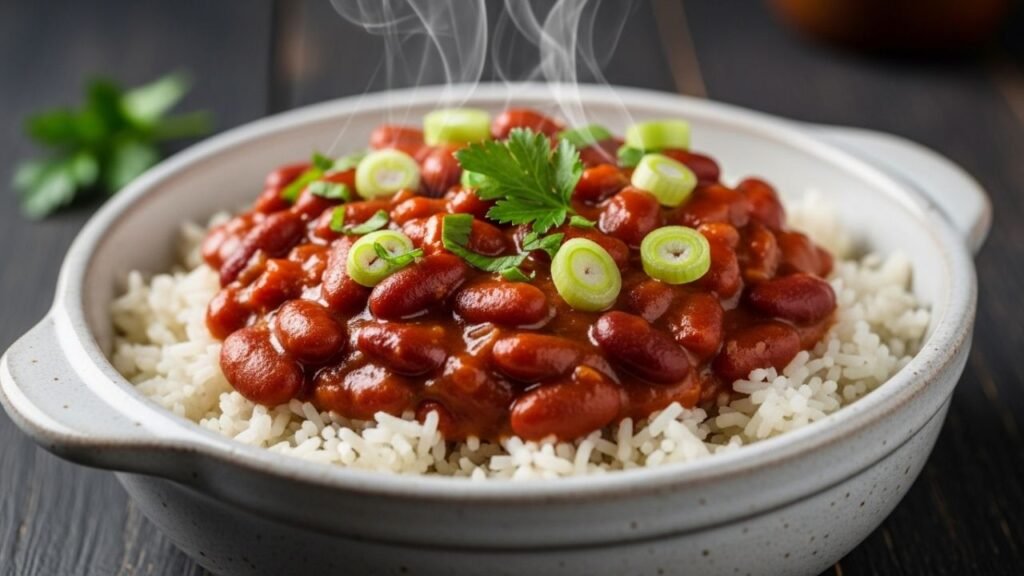
13. Fluff and serve. Spoon the rice into bowls and ladle the red beans generously over the top. Garnish with sliced green onions and fresh parsley. Serve with hot sauce on the side.
Pro Tips and Common Mistakes to Avoid
Even a straightforward recipe like this has a few places where things go sideways. Here is what to watch for.
Do not add salt early. This is the most common mistake. Salt strengthens the pectin in bean skins, making them resist softening. Season at the end and your beans will be silky instead of tough.
Do not skip the overnight soak. Quick-soaking in hot water works in a true emergency, but the overnight cold-water soak produces a better-textured bean that holds its shape through the long cook without turning to mush.
Do not rush the sauté. The holy trinity needs 8 to 10 full minutes. If you crank the heat to save 5 minutes, you get raw-tasting vegetables in the final dish instead of that deep, sweet, caramelized base.
Watch your simmer temperature. A rolling boil will cause the beans to fall apart and turn to mush. A hard simmer is too aggressive. You want lazy, slow bubbles rising to the surface.
Mash some beans. I cannot stress this enough. Without mashing, you get beans in broth. With mashing, you get beans in a thick, luscious sauce. These are two very different eating experiences.
Variations and Substitutions
The beauty of this red beans and rice recipe is how adaptable it is without losing its identity.
Make it vegetarian. Skip the andouille entirely and add a tablespoon of smoked paprika plus a teaspoon of liquid smoke. Use vegetable stock instead of chicken stock. Add two tablespoons of soy sauce for umami. You will be surprised at how satisfying the result is.
Use small red beans instead of kidney beans. In New Orleans, small red beans (not kidney beans) are actually the traditional choice. They cook slightly faster and have a slightly creamier texture. If you can find them, try them.
Add pickled pork. Old-school Louisiana recipes often call for pickled pork, a salt-cured pork product that gives the beans a distinctive tangy depth. If you can find it at a specialty butcher, adding a few ounces transforms the dish into something deeply authentic.
Spice it up. If you love heat, add one seeded jalapeño or a pinch more cayenne with the holy trinity. You can also serve with extra hot sauce at the table to let everyone control their own heat level.
Use a slow cooker. After browning the sausage and sautéing the vegetables, transfer everything to a slow cooker with the soaked beans and liquid. Cook on low for 7 to 8 hours or on high for 4 to 5 hours. Mash some beans before serving as you would on the stovetop.
How to Store, Reheat, and Serve
Red beans and rice actually tastes better the next day. The flavors deepen overnight and the sauce thickens beautifully as it sits. This is one of those dishes that leftovers are genuinely looked forward to.
Storage: Store the red beans and rice separately in airtight containers in the refrigerator for up to 5 days. The beans thicken considerably when chilled, which is completely normal.
Freezing: Red beans freeze very well. Store in freezer-safe containers or zip bags for up to 3 months. The rice does not freeze as well, so consider freezing only the beans and cooking fresh rice when ready to serve.
Reheating: Reheat beans on the stovetop over medium-low heat with a splash of water or stock to loosen the sauce. Stir gently and heat through until hot. Avoid the microwave if you can — the beans heat unevenly and can dry out quickly. If you do use a microwave, add a tablespoon of water, cover loosely, and heat in 60-second increments.
Serving suggestions: Serve in a wide, shallow bowl with the rice centered and the beans ladeled around or on top. Add a few dashes of Crystal hot sauce, a sprinkle of green onions, and cornbread on the side. A cold glass of sweet tea or a cold lager completes the meal.
What do you usually serve alongside your red beans and rice? Drop your go-to side dish in the comments — I am always looking for new combinations.
Red Beans and Rice Recipe FAQ
Q : Can I use canned kidney beans instead of dried?
Ans – You can, but the texture and flavor will be noticeably different. Canned beans are already fully cooked, so they will not absorb the flavors from the sausage, aromatics, and spices the same way dried beans do during a long simmer. If using canned beans, drain and rinse them, then add them about 30 minutes before the end of cooking rather than from the beginning.
Q : Why are my beans still hard after 2 hours of cooking?
Ans – This usually happens for one of three reasons: the beans were not soaked long enough, they were salted too early in the cooking process, or the water you used is high in minerals (hard water). Try soaking for the full overnight, adding salt only at the very end, and using filtered water if your tap water is heavily mineralized.
Q : Can I make red beans and rice ahead of time?
Ans – Absolutely, and it is actually recommended. The red beans taste significantly better after sitting overnight in the refrigerator. Make the beans a full day ahead, store them separately from the rice, and reheat gently on the stovetop before serving. This makes it a great meal for dinner parties or weekly meal prep.
Q : What is the difference between Cajun and Creole red beans and rice?
Ans – Both are rooted in Louisiana tradition, but Creole cooking (from New Orleans) tends to use tomatoes, butter, and a wider range of spices, while Cajun cooking is more rural, spicier, and relies heavily on rendered fat and smoked meats. This recipe leans Creole. Neither is wrong — they are just different expressions of the same soulful tradition.
Q : Can I substitute a different sausage if I cannot find andouille?
Ans – Yes. Smoked kielbasa, smoked beef sausage, or even chorizo work well. The key is using a smoked sausage of some kind — the smokiness is a core flavor in the dish. If you use a fresh (unsmoked) sausage, add an extra half teaspoon of smoked paprika to compensate.
Q : Is red beans and rice healthy?
Ans – Kidney beans are an excellent source of plant-based protein, dietary fiber, iron, and folate, making them a nutritionally dense food. According to the U.S. Department of Agriculture’s MyPlate guidelines, beans and legumes are among the most nutrient-rich foods you can eat. The full dish with rice and sausage is a hearty, satisfying meal — using lower-fat turkey sausage and reducing the oil can make it lighter without sacrificing too much flavor. The Harvard T.H. Chan School of Public Health also notes that regular legume consumption is associated with reduced risk of heart disease and improved blood sugar control.
If you tried this red beans and rice recipe and loved it, leave a comment below and let me know how it turned out. Did you add anything different? Use a different sausage? Make it vegetarian? Every variation is worth sharing — this dish has been evolving in kitchens for centuries, and yours is part of that story.