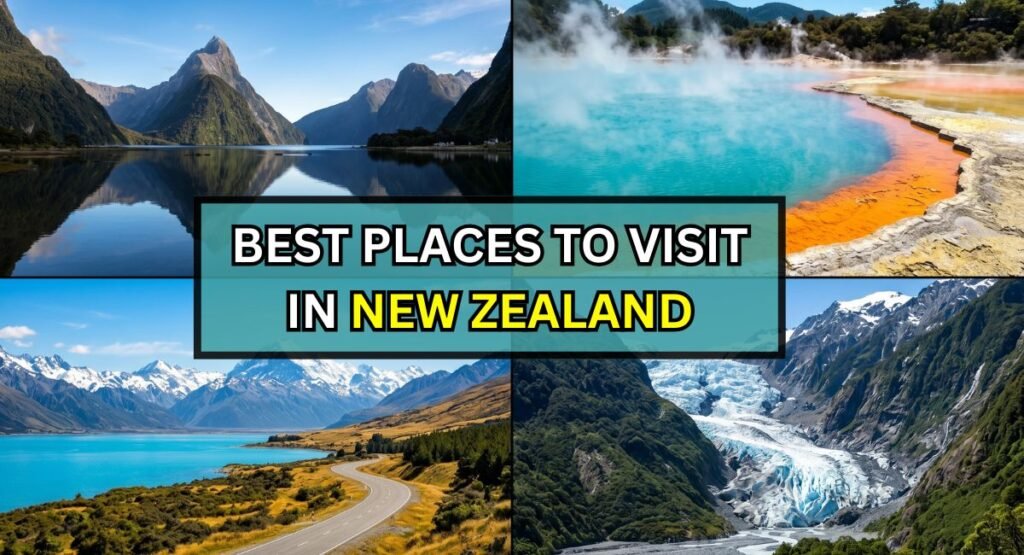
Best Places to Visit in New Zealand : I’ll be honest with you — I went to New Zealand thinking it would be another pretty country with some green hills and a couple of scenic lakes. I came back completely humbled.
This place doesn’t just show you natural beauty. It hits you with it like a freight train you never saw coming. The best places to visit in New Zealand stretch across two wildly different islands, each with its own personality, its own terrain, and its own set of moments that’ll make you quietly whisper, “I can’t believe this is real.”
Whether you’re planning your first international trip Down Under, researching the top 10 places to visit in New Zealand before a big adventure, or trying to choose between the North and South Islands — this guide has everything you need. I’ve broken it down the way a well-traveled American friend would: honest, detailed, and with zero fluff.
 34 Expert Caribbean Cruise Tips Every Cruiser Should Know Before You Set Sail
 Eastern vs. Western Caribbean Cruise: Which One Is Actually Right for You?
 Best Anniversary Trips in the USA: 15 Unforgettable Destinations That’ll Make You Fall in Love All Over Again
 Top 10 Places to Visit in the World That Will Ruin Every Other Trip (In the Best Way)
Let’s get into it.
Quick Facts: New Zealand at a Glance
| Detail | Info |
|---|---|
| Country | New Zealand (Aotearoa) |
| Capital | Wellington |
| Official Languages | English, Māori, NZ Sign Language |
| Currency | New Zealand Dollar (NZD) — roughly $0.60 USD per NZD |
| Time Zone | NZST (UTC+12) / NZDT (UTC+13 in summer) |
| Visa Requirements | Americans get visa-free entry for up to 90 days (NZeTA required — apply online) |
| Best Duration of Stay | 14–21 days for both islands; 7–10 days for one island |
| International Airports | Auckland (AKL), Queenstown (ZQN), Christchurch (CHC) |
Why New Zealand Stopped Me in My Tracks
I’ve been to Iceland. I’ve done Peru. I’ve stood at the edge of the Grand Canyon at golden hour. None of that prepared me for what New Zealand delivers at almost every turn.
What makes it different isn’t just one mountain range or one famous fjord. It’s the density of it all. Within a single day’s drive, you can move from black sand beaches to glowing caves to snow-capped mountains to geothermal vents bubbling up from the earth. The variety here is absurd in the best possible way.
The most beautiful places to visit in New Zealand aren’t just for Instagram, either. They hit different when you’re standing in them — quieter, realer, and somehow more vast than any photo suggests.
There’s also the Māori culture woven through everything — in place names, in the haka, in the food, in the way locals talk about the land. It adds a spiritual weight to the whole journey that I wasn’t expecting and couldn’t get enough of.
For Americans specifically, the vibe is friendly and familiar but refreshingly unhurried. Nobody is rushing you out of a restaurant. The highways are empty. The trails are well-marked. And the coffee — New Zealanders take their coffee seriously, so you’re in good hands there too.
Have you ever visited a country and immediately wished you’d booked a longer trip? Tell me in the comments — New Zealand was mine.
Best Time to Visit New Zealand
The timing of your trip matters more here than almost anywhere else I’ve traveled, because New Zealand’s seasons are flipped from ours. December is summer; July is winter. That alone throws off a lot of American travelers who instinctively think “summer trip” means June.
Here’s how to read the calendar like a Kiwi:
34 Expert Caribbean Cruise Tips Every Cruiser Should Know Before You Set Sail
Eastern vs. Western Caribbean Cruise: Which One Is Actually Right for You?
Best Anniversary Trips in the USA: 15 Unforgettable Destinations That’ll Make You Fall in Love All Over Again
Top 10 Places to Visit in the World That Will Ruin Every Other Trip (In the Best Way)
| Month / Season | Weather | Crowd Level | Best For |
|---|---|---|---|
| December – February (Summer) | Warm to hot, 65–85°F, occasional rain | Very High (peak season) | Beaches, hiking, Milford Sound, road trips |
| March – May (Autumn) | Mild, 50–70°F, golden foliage | Moderate | Queenstown wine harvest, fewer crowds, scenic drives |
| June – August (Winter) | Cold in South, mild in North, snow in mountains | Low | Skiing in Queenstown/Wanaka, Hobbiton with mist, cozy lodges |
| September – November (Spring) | Warming up, blooming landscapes, unpredictable | Low to Moderate | Wildflowers, lambs in fields, Milford Sound with waterfalls |
My honest recommendation for most Americans: Travel in March–April or October–November. You’ll get stunning weather, smaller crowds, and cheaper prices. Milford Sound actually looks more dramatic in spring when the waterfalls are running full force after winter rains.
If you’re specifically checking Google Flights for deals, mid-April and late October tend to have the best fares from major US hubs like LAX, SFO, and JFK. Auckland is the most common entry point — expect 12–17 hours of flight time depending on your departure city.
Best Places to Visit in New Zealand: 15 Incredible Destinations
These aren’t ranked by some algorithm — they’re ordered in a way that makes sense for an actual trip, flowing from North Island to South Island the way most travelers move.
1. Auckland — Your Gateway to Everything
Full Name: Auckland, Waitematā, North Island
Auckland is where most flights land, and a lot of travelers treat it like a layover city. That’s a mistake.
Yes, it’s New Zealand’s largest city — but it sits on a narrow volcanic isthmus between two harbors, giving it a waterfront feel unlike any other urban destination in Oceania. The Sky Tower gives you a panoramic view that stretches out to the Hauraki Gulf and the dormant volcanoes dotting the landscape.
The Viaduct Harbour area is where you’ll find great seafood, craft beer, and an electric evening energy. The Auckland War Memorial Museum is one of the finest Māori cultural collections in the world — don’t skip it.
Don’t miss: A day trip to Waiheke Island — 35 minutes by ferry, and you’ll find world-class vineyards, olive groves, and beaches that look like Greece on a good day.
Getting around: Auckland’s public transport is decent but slow. For a day trip to Waiheke, the ferry from the downtown terminal is easy and affordable (around $25–30 USD round trip).
2. Bay of Islands — Where New Zealand’s Story Began
Full Name: Bay of Islands, Northland Region, North Island
If you want to understand New Zealand’s soul, you go to the Bay of Islands. This is where the Treaty of Waitangi was signed in 1840 — the founding document between the British Crown and Māori chiefs. Standing at the Waitangi Treaty Grounds isn’t just a history lesson; it’s one of the most moving cultural experiences in the country.
The bay itself has 144 islands scattered across glittering turquoise water. You can kayak between them, jump on a dolphin-watching cruise, or catch a game fish in waters that serious anglers travel across the world for.
The town of Paihia is your base — friendly, laid-back, and far more affordable than Queenstown. The nearby village of Russell (a short ferry ride across) is one of the prettiest heritage towns in New Zealand, with Victorian buildings and a harbor straight out of a painting.
Pro tip: The Hole in the Rock — a dramatic sea arch at Cape Brett — is worth the full-day boat cruise. Dolphins regularly escort the boat there. I’m not exaggerating when I say it’s one of the most cinematic things I’ve seen at sea.
3. Rotorua — Earth’s Most Theatrical Performance
Full Name: Rotorua, Bay of Plenty Region, North Island
Rotorua smells like sulfur. You’ll notice it the second you step out of the car. Locals call it “the smell of money” because it keeps tourists coming year after year — and they’re right.
Rotorua is famous for its geothermal attractions, and nothing quite prepares you for seeing the ground itself boiling. The Wai-O-Tapu Thermal Wonderland has multi-colored pools in shades of chartreuse, turquoise, blood orange, and deep crimson — all natural, all caused by different mineral compositions. The Champagne Pool (so named because of the carbon dioxide bubbles) is the Instagram moment everyone comes for, but the whole park is spectacular.
The Whakarewarewa Living Village offers something deeper: it’s an actual Māori community built on a geothermal field, where residents cook in natural hot springs and have done so for centuries. A guided tour here connects you with living culture, not museum culture.
For top family-friendly destinations in New Zealand, Rotorua is unbeatable — there’s luge riding, zip-lining, Māori cultural shows, and rainbow trout fishing all within a short drive.
4. Hobbiton Movie Set — Middle-Earth Is Real and It’s in Matamata
Full Name: Hobbiton Movie Set, Matamata, Waikato Region, North Island
Even if you’re only a casual Lord of the Rings fan, walking through Hobbiton is a genuinely surreal experience. The rolling green hills of the Alexander family farm in Matamata were chosen by Peter Jackson because they looked so perfectly pastoral — and they still do.
The round doors, the gardens, the Green Dragon Inn where you get a complimentary ale or ginger beer — it’s all immaculately maintained. The tour guides are knowledgeable and enthusiastic without being over-the-top about it.
Book in advance: Hobbiton tours regularly sell out weeks ahead during peak season. Tickets run around $85–95 USD per adult. Yes, that feels steep. Yes, it’s worth it.
5. Waitomo Glowworm Caves — A Living Galaxy Underground
Full Name: Waitomo Glowworm Caves, Waikato Region, North Island
Imagine floating in a small boat through complete darkness while thousands of tiny bioluminescent creatures turn the cave ceiling into a starfield. That’s Waitomo, and it’s one of the most Instagram-worthy places in New Zealand — though no photography is allowed inside, which somehow makes the experience more intimate and real.
The glowworms (Arachnocampa luminosa) are unique to New Zealand. They create silky threads that hang down to catch insects, and the blue-green light they emit is otherworldly.
There are three cave systems: Waitomo Glowworm Caves, Ruakuri Cave (no Māori sacred sites, so it’s more accessible), and Aranui Cave (stunning limestone formations). If you only do one, do the Glowworm Caves. If you have a full day, combine all three.
For the adventurous: Black water rafting — floating on inner tubes through underground rivers in the dark — is one of the most unique things I’ve done anywhere in the world. Highly, highly recommend.
6. Wellington — The Capital That Punches Way Above Its Weight
Full Name: Wellington, Wellington Region, North Island
Wellington is New Zealand’s capital city and its cultural heartbeat. It’s compact, walkable, and has one of the highest per-capita café and restaurant densities in the world (they’re not shy about this fact — Wellingtonians are proud of their coffee culture).
Te Papa Tongarewa — the national museum — is free, and it’s one of the best museums I’ve visited anywhere. The exhibits on Māori culture, New Zealand’s natural history, and the Treaty of Waitangi are deeply done and genuinely engaging.
Wellington is also the home of Weta Workshop — the creative studio behind the special effects for Lord of the Rings, Avatar, and dozens of other major films. Their studio tour in Miramar is a must for film nerds and fascinating even if you’re not.
The Cuba Street neighborhood is where you’ll find Wellington’s indie soul: vintage shops, live music, great food, and murals everywhere. It’s the kind of street you wander for three hours and realize you’ve still missed half of it.
7. Abel Tasman National Park — The Coast That Changes Everything
Full Name: Abel Tasman National Park, Nelson-Tasman Region, South Island
The moment you cross to the South Island, the scenery shifts dramatically. Abel Tasman is New Zealand’s smallest national park but arguably its most visually perfect — golden-sand beaches, jade-green water, forest trails, and colonies of fur seals that couldn’t care less about you.
The Abel Tasman Coast Track is one of New Zealand’s famous “Great Walks.” The full track takes 3–5 days, but you can water-taxi to a section and walk back for a one-day version that still delivers the essential experience.
Kayaking here is extraordinary. Paddling around Split Apple Rock (a perfectly rounded granite sphere split in two by the sea) and into secluded coves with no other people around is the kind of thing that gets burned into your memory.
Best for: Couples, solo travelers, and small groups who want natural beauty without extreme difficulty. The terrain is accessible, the campsites are well-set-up, and the water taxi system makes logistics easy.
8. Kaikōura — Where You Can Swim with Sperm Whales
Full Name: Kaikōura, Canterbury Region, South Island
Kaikōura sits between the Kaikōura mountain range and the Pacific Ocean, and it’s one of those places where the geography creates something almost magical. The Hikurangi oceanic trench runs close to shore, bringing deep-water marine life within reach of a small coastal town.
Sperm whale watching from Kaikōura is world-class — not because they’re baited or staged, but because the geography makes the area one of the most accessible whale-watching spots on earth. You’ll also commonly see dolphins (Dusky and Hector’s dolphins, which are among the smallest and rarest in the world), New Zealand fur seals, and seasonal albatross.
The town is also known for its crayfish (what New Zealanders call lobster). The local crayfish here are pulled fresh and cheap by American standards — grab some from a roadside stand and eat it on the beach. That’s a proper Kaikōura afternoon.
9. Christchurch — A City Rebuilt and More Beautiful for It
Full Name: Christchurch, Canterbury Region, South Island
Christchurch was devastated by earthquakes in 2010 and 2011, and the rebuilding process transformed it into one of the most interesting urban spaces in the Southern Hemisphere. The city embraced innovation — shipping container malls, pop-up art installations, and world-class architecture replaced what was lost.
The Botanic Gardens and Hagley Park give the city a lush, genteel character. The Canterbury Museum is free and excellent. The newly rebuilt Christchurch Cathedral — now a transitional cardboard cathedral designed by Japanese architect Shigeru Ban — is genuinely moving and architecturally stunning.
Use Christchurch as your South Island gateway. It has an international airport, good accommodation at every budget level, and easy access to everything south.
10. Lake Tekapo — The World’s Best Stargazing, Full Stop
Full Name: Lake Tekapo (Takapō), Mackenzie Basin, Canterbury Region, South Island
Lake Tekapo is famous among tourists for two things: the impossibly turquoise color of the glacial lake itself and the Aoraki Mackenzie International Dark Sky Reserve — one of the largest certified dark sky reserves on the planet.
The turquoise color comes from glacial flour (ultra-fine particles of rock ground by glaciers) suspended in the water. It doesn’t look real. On a calm day, the Southern Alps reflect perfectly in the surface. The Church of the Good Shepherd, a tiny stone chapel right at the lake’s edge, is one of New Zealand’s most photographed spots — and unlike most “most photographed” things, it actually earns it.
At night, this place is another world entirely. The Milky Way isn’t just visible — it’s overwhelming. The Mount John Observatory offers guided stargazing tours that include telescope views of nebulae and star clusters you’ve never seen from home. Even if you’ve never been interested in astronomy, this changes that.
Best for: Couples, photographers, and anyone who’s ever wanted to see the Southern sky without light pollution.
What’s the most beautiful night sky you’ve ever seen while traveling? Drop it in the comments — I’m always collecting new stargazing spots.
11. Mount Cook National Park (Aoraki) — New Zealand’s Rooftop
Full Name: Aoraki/Mount Cook National Park, Mackenzie Region, Canterbury, South Island
Aoraki/Mount Cook is New Zealand’s highest peak at 12,218 feet, and the national park around it is some of the most dramatic alpine scenery in the Southern Hemisphere. Sir Edmund Hillary trained here before climbing Everest — and once you see the terrain, that makes complete sense.
The Hooker Valley Track is the park’s most famous walk — a well-formed 3-hour return trail that ends at a glacier lake with floating icebergs and Aoraki framed behind them. It’s one of the most rewarding short hikes I’ve done anywhere. Not because it’s hard — it’s not — but because the payoff is absolutely absurd.
For serious hikers: The Ball Pass and Copland Track routes require guides and preparation, but offer a completely different level of alpine immersion.
The park village (Mount Cook Village) is tiny but has a good visitor center, a couple of restaurants, and accommodation ranging from hostels to the luxury Hermitage Hotel (which has incredible mountain views and a surprisingly good stargazing program).
12. Wanaka — Queenstown’s Quieter, Cooler Sibling
Full Name: Wānaka, Otago Region, South Island
Wanaka sits at the edge of Lake Wanaka with the Southern Alps behind it, and it’s been gradually attracting travelers who want the beauty of Queenstown without the bachelor-party energy.
The town is small, the lakefront is gorgeous, and the surrounding mountains offer both summer hiking and winter skiing at Treble Cone and Cardrona ski areas. The Roys Peak Track is the iconic day hike here — a 10-mile round trip to a summit that delivers 360-degree views of lake, glacier, and mountain that photographers travel from across the world to capture.
Puzzling World near Wanaka is a quirky, genuinely fun attraction that’s great for families and couples who want something different — giant mazes, optical illusions, and interactive puzzles.
Roy’s Peak tip: Start no later than 6 AM in summer. The track gets very busy and the summit views are clearest in early morning before afternoon clouds roll in.
13. Queenstown — The Adventure Capital of the Southern Hemisphere
Full Name: Queenstown, Otago Region, South Island
Queenstown is absolutely worth visiting for adventure lovers. Bungee jumping was invented here. Jet boating was invented here. Skydiving, canyon swinging, white-water rafting, paragliding — if it gives you an adrenaline rush, Queenstown has it.
But it’s not just for thrill-seekers. The town sits at the edge of Lake Wakatipu with the Remarkables mountain range rising straight out of the water behind it. The scenery is so dramatically perfect it barely seems real.
The gondola ride up Bob’s Peak gives you an overview of the whole basin and access to luge runs, a restaurant, and walking trails. Fergburger — a local institution — is genuinely the best burger I’ve had outside the US, and the line out the door at midnight tells you everything you need to know.
For wine lovers, the Gibbston Valley wine region is just 20 minutes from Queenstown and produces some of the world’s best cool-climate Pinot Noir from vineyards built into dramatic gorge walls.
For families: The Skyline Gondola and luge is a hit with all ages. The Shotover River jet boat is exciting without being scary.
14. Fiordland National Park & Milford Sound — The Most Famous View in the Country
Full Name: Milford Sound (Piopiotahi), Fiordland National Park, Southland Region, South Island
If New Zealand has one single scene burned into the world’s imagination, it’s the Milford Sound — towering granite walls rising straight from dark water, Mitre Peak reflecting in the fjord below, waterfalls cascading down in silver threads from 3,000 feet up.
Milford Sound is considered one of the most beautiful destinations in the world because there’s simply nothing else like it on earth. The scale is impossible to understand from photos. You have to be there, on a boat, looking up, to actually feel how small and lucky you are.
The drive to Milford Sound from Queenstown (about 4 hours) through Fiordland National Park is itself one of New Zealand’s best road trip routes — the Homer Tunnel, Mirror Lakes, and the Eglinton Valley are all extraordinary.
Practical notes:
- Cruise the sound by boat (day cruises start around $60–80 USD; overnight kayak cruises are unforgettable)
- Fly-drive options from Queenstown get you there faster but you lose the scenery
- Rainy days are better — the waterfalls multiply dramatically, mist fills the valley, and the whole fjord becomes even more atmospheric
- Book everything well ahead in peak season; Milford Sound is one of those places that fills up fast
The Milford Track — a 4-day guided or freedom hike — is widely considered New Zealand’s finest Great Walk and books out a year in advance for peak-season dates.
15. Stewart Island (Rakiura) — New Zealand’s Most Remote Wild Frontier
Full Name: Stewart Island / Rakiura, Southland Region, South Island
Most Americans never make it to Stewart Island, which is exactly why you should. New Zealand’s third main island sits 17 miles south of the South Island and has a permanent population of about 400 people. Eighty-five percent of the island is protected as Rakiura National Park.
This is wild New Zealand in its purest form — dense podocarp forest, deserted beaches, and some of the best chances on earth to see a wild kiwi bird in daylight (most kiwis are nocturnal, but the Stewart Island brown kiwis are known to forage on beaches in the late afternoon).
Getting there: a 20-minute flight from Invercargill or a 1-hour ferry that can be rough but is worth it.
Best for: Serious nature lovers, hikers, and anyone who wants to genuinely get off the beaten path without going somewhere completely inaccessible.
Where to Stay, Eat, and Get Around New Zealand
Getting Around
Renting a car (or a campervan) is, without question, the best way to see New Zealand. The roads are good, the drives are scenic, and public transport outside major cities is limited. Americans drive on the left here — it takes about a day to adjust, and roundabouts become second nature by day three.
Domestic flights between Auckland, Wellington, Queenstown, and Christchurch are frequent and affordable. Air New Zealand is reliable; watch for sales (they run them often) for inter-island hops under $60 USD.
The Interislander Ferry between Wellington and Picton (South Island) takes 3.5 hours and is a genuinely scenic crossing through the Marlborough Sounds. Worth doing at least one way.
Where to Stay
- Budget: YHA New Zealand hostels are well-run and clean. Expect $25–45 USD per night.
- Mid-range: Airbnb is plentiful and often cheaper than hotels. Boutique motels in smaller towns offer good value ($80–130 USD/night).
- Luxury: The Rees Hotel in Queenstown, Eagles Nest in the Bay of Islands, and The Hermitage at Mount Cook are standout properties.
- Campervan: Freedom camping (with the right permits) is legal in many areas. A campervan rental gives you total flexibility and is often the most cost-effective option for 2+ weeks.
Where to Eat
New Zealand’s food scene is genuinely excellent and very ingredient-focused:
- Seafood: Green-lipped mussels, Bluff oysters (seasonal), and Kaikōura crayfish are national treasures
- Lamb: New Zealand lamb is some of the world’s best — order it anywhere, prepared any way
- Māori hangi: A traditional feast cooked underground in geothermal steam (Rotorua is the best place for this)
- Flat white coffee: The New Zealand/Australian flat white is superior. You will come home spoiled.
- Whitebait fritters: A delicate local specialty found on menus throughout the South Island — try them once
Pro Tips and Common Tourist Mistakes to Avoid
Book the Great Walks in advance. The Milford Track, Routeburn Track, and Abel Tasman Coast Track all require bookings through the Department of Conservation (DOC). For peak season (November–April), you need to book 3–6 months out. These aren’t casual walks you show up for.
Don’t underestimate driving times. Google Maps on New Zealand’s winding mountain roads is optimistic. Add 30% to any estimated drive time, especially in Fiordland and around the Southern Lakes.
Weather changes fast. Pack layers regardless of season. The South Island especially can swing from sunshine to driving rain within an hour. A good rain jacket isn’t optional — it’s essential.
Respect the trails. New Zealand’s conservation authority (DOC) takes trailhead rules seriously. Stay on marked paths, take all rubbish with you, and don’t feed wildlife.
Sunscreen is non-negotiable. The UV index in New Zealand is intense year-round due to the thinner ozone layer in the Southern Hemisphere. SPF 50+ isn’t paranoid — it’s practical.
Don’t skip the North Island. Most itineraries focus heavily on the South Island because the landscapes are more dramatic. But Rotorua, Hobbiton, the Bay of Islands, and Wellington are genuine highlights that many travelers regret skipping.
Currency: ATMs are widely available. Most places accept Visa and Mastercard. Small farms, roadside stands, and some rural cafes are cash-only — carry some NZD for those.
Budget Breakdown: What to Actually Expect to Spend
New Zealand is not a cheap destination, but it’s very manageable if you plan. Here’s an honest breakdown per day, in USD:
| Budget Level | Accommodation | Food | Activities | Transport | Daily Total |
|---|---|---|---|---|---|
| Backpacker | $30–45 (hostel) | $25–35 | $20–40 | $15–25 | ~$90–145/day |
| Mid-Range | $80–130 (motel/Airbnb) | $45–65 | $50–100 | $30–50 | ~$205–345/day |
| Luxury | $200–450 (hotel) | $80–120 | $100–250 | $60–120 | ~$440–940/day |
Major expense categories to plan for:
- Round-trip flights from the US: $900–$1,500 USD (watch for sales via Google Flights — Auckland from LAX goes on sale 4–6 months out)
- Campervan rental: $80–150 USD per day (often the best value for 2 travelers)
- Milford Sound cruise: $60–100 USD
- Hobbiton tour: $85–95 USD per adult
- Great Walk permits: $30–80 USD per person per hut night
- Bungee jumping in Queenstown: $150–200 USD (AJ Hackett original site)
Money-saving tips:
- Cook your own meals in hostels and campervans — supermarkets (Countdown, New World, Pak’nSave) are well-stocked
- Look for DOC campgrounds ($5–15 USD/night) for budget camping
- Book activities directly through local operators rather than booking platforms that add commission
- Travel in March–May or September–October for lower accommodation rates
How to Plan Your Itinerary: A 14–21 Day Sample Schedule
Two Weeks in New Zealand (Best of Both Islands)
Days 1–3: Auckland & Waiheke Island Arrive, recover from jet lag, explore the city, and do a full day on Waiheke Island.
Days 4–5: Bay of Islands or Hobbiton + Waitomo Drive north to Bay of Islands for culture and ocean, or head south via Hobbiton and the Waitomo Caves.
Day 6: Wellington Fly or drive (5 hours) to Wellington. Te Papa museum, Cuba Street, Zealandia night tour.
Days 7–8: Marlborough Sounds & Nelson Catch the Interislander ferry to the South Island. Drive through Marlborough wine country. Stay in Nelson near Abel Tasman.
Day 9: Abel Tasman Kayak or walk a section of the coast track.
Days 10–11: Christchurch & Kaikōura Explore Christchurch then drive north to Kaikōura for whale watching.
Days 12–13: Lake Tekapo & Aoraki/Mount Cook Head south through the Mackenzie Basin. Stargazing at Tekapo, Hooker Valley Track at Mount Cook.
Days 14–15: Queenstown & Milford Sound Drive into Queenstown. Full day to Milford Sound. Evening in Queenstown.
Days 16–17: Wanaka Short drive to Wanaka. Roys Peak hike if energy allows.
Days 18–21 (extended): Add Stewart Island, Fiordland kayaking, or revisit favorites before flying home from Queenstown or Christchurch.
One Week in New Zealand (South Island Focus)
Christchurch → Kaikōura → Lake Tekapo → Mount Cook → Queenstown → Milford Sound → Fly home from Queenstown.
This itinerary covers the best places to visit in New Zealand South Island efficiently and leaves you with a complete sense of what makes this island extraordinary.
Places to Visit in New Zealand with Family
New Zealand is genuinely one of the best family travel destinations in the world. Here’s what works specifically well for kids and parents together:
- Rotorua: Geothermal parks, luge rides, zorbing, and Māori cultural shows keep every age engaged
- Hobbiton: Universally magical for kids who love the films and curious for those who don’t
- Abel Tasman: Water taxis and short easy walks work for kids who can’t do full-day hikes
- Queenstown Skyline Gondola & Luge: Safe thrills for ages 6 and up
- Kelly Tarlton’s Aquarium (Auckland): Excellent for young kids, with penguins and a shark tank tunnel
- Waitomo Glowworm Caves: Genuinely wondrous for children — the darkness isn’t scary, it’s magical
Places to visit in New Zealand in December for families: The Abel Tasman coast is perfect (warm, calm water, beaches) and Queenstown is buzzing with summer activity. Book accommodation 3–6 months in advance for December travel.
Frequently Asked Questions About New Zealand Travel
What are the most beautiful places to visit in New Zealand? The most consistently stunning destinations include Milford Sound in Fiordland, Lake Tekapo in the Mackenzie Basin, Aoraki/Mount Cook, and the Abel Tasman coastline. All four belong in the top tier of natural scenery anywhere in the world, not just in New Zealand.
Which island in New Zealand is more scenic for travelers? The South Island is generally more dramatic — bigger mountains, fjords, glaciers, and alpine lakes. But the North Island has geothermal landscapes, Māori culture, and lush coastal scenery that the South Island can’t match. First-timers who have 14+ days should do both; if you only have a week, the South Island wins on pure visual impact.
What is the best time to explore New Zealand’s natural beauty? March through May (autumn) is the sweet spot: warm enough for comfortable hiking, fewer crowds than summer, and golden foliage across the South Island. Spring (September–November) is also excellent, especially for waterfall-heavy destinations like Milford Sound and the waterfalls of Fiordland.
Why is Milford Sound considered one of the most beautiful destinations in the world? Milford Sound’s scale and drama are genuinely unmatched — sheer granite fiord walls rise 4,000–5,000 feet straight from the water, Mitre Peak is one of the world’s most photographed natural formations, and the combination of waterfalls, wildlife (dolphins, seals, penguins), and misty atmosphere creates something that photographs cannot fully capture. It has to be experienced in person.
What are the top hidden gems to visit in New Zealand? Stewart Island for wild kiwi sightings and untouched forest; the Catlins Coast on the southern tip of the South Island for sea stacks, wildlife, and total solitude; the Coromandel Peninsula on the North Island for Cathedral Cove and Hot Water Beach; and the Marlborough Sounds, which most travelers pass through without stopping to explore.
Is Queenstown worth visiting for adventure lovers? Absolutely, without hesitation. Queenstown invented modern adventure tourism. Even if you don’t do every extreme activity, the setting alone — lake, mountains, alpine air — justifies the visit. The food and wine scene has also matured significantly in recent years, making it worth visiting even for those who prefer their adventures at a calmer pace.
What are the best lakes to visit in New Zealand? Lake Tekapo for turquoise water and stargazing, Lake Wanaka for mountain reflections, Lake Wakatipu in Queenstown for dramatic alpine surroundings, and Lake Rotorua for geothermal context and Māori culture. Each has a completely different character and experience attached to it.
How many days are enough to explore the beauty of New Zealand? You need a minimum of 14 days to see both islands properly, and 21 days is ideal for a more relaxed pace. A single week can work for the South Island or North Island individually, but rushing between both in 7 days means missing too much. New Zealand rewards slow travel.
What are the best road trip routes in New Zealand? The Milford Sound Highway (State Highway 94) through Fiordland is the most famous. The Kaikōura coastal drive, the Mackenzie Basin route via Lake Tekapo to Mount Cook, and the Tongariro Alpine Crossing approach road on the North Island are all exceptional. For a full-country road trip, the classic loop is Auckland → Bay of Islands → Rotorua → Wellington (ferry) → Nelson → Christchurch → Tekapo → Queenstown → Milford Sound.
Which beaches in New Zealand are perfect for a relaxing vacation? Waiheke Island beaches near Auckland, the Abel Tasman National Park beaches near Marahau, and the Coromandel Peninsula’s Cathedral Cove and Hot Water Beach are the best for relaxation with beauty. In the Bay of Islands, Paihia and Haruru Falls areas offer calm swimming beaches with cultural context nearby.
A Final Word Before You Book That Flight
New Zealand doesn’t do anything halfway. The mountains are genuinely towering. The silence on a remote South Island beach is actual silence. The people are genuinely friendly — not hotel-lobby friendly, but will-stop-their-car-to-make-sure-you’re-okay friendly.
For Americans, it’s one of those rare destinations that’s simultaneously easy to navigate (English-speaking, well-organized, familiar infrastructure) and completely unlike anything you’ve experienced at home.
Whether you’re searching the top 10 most beautiful places in New Zealand for a once-in-a-lifetime trip, trying to decide between the North Island and South Island, or looking for the best places to visit in New Zealand for first timers — the answer is almost always the same: go. Go as soon as you can. Go for as long as you can stay.
You’ll come back different. You always do.
Reference & Travel Resources
- U.S. Department of State — New Zealand Travel Advisory: travel.state.gov (Check current safety ratings and entry requirements before travel)
- CDC — New Zealand Health Information for Travelers: wwwnc.cdc.gov (Recommended vaccinations and health precautions for visiting New Zealand)
- New Zealand Official Tourism Site: newzealand.com (Practical trip planning, Great Walks booking, and regional guides)
For more destination guides, travel tips, and itinerary ideas, visit worldfusiontours.com