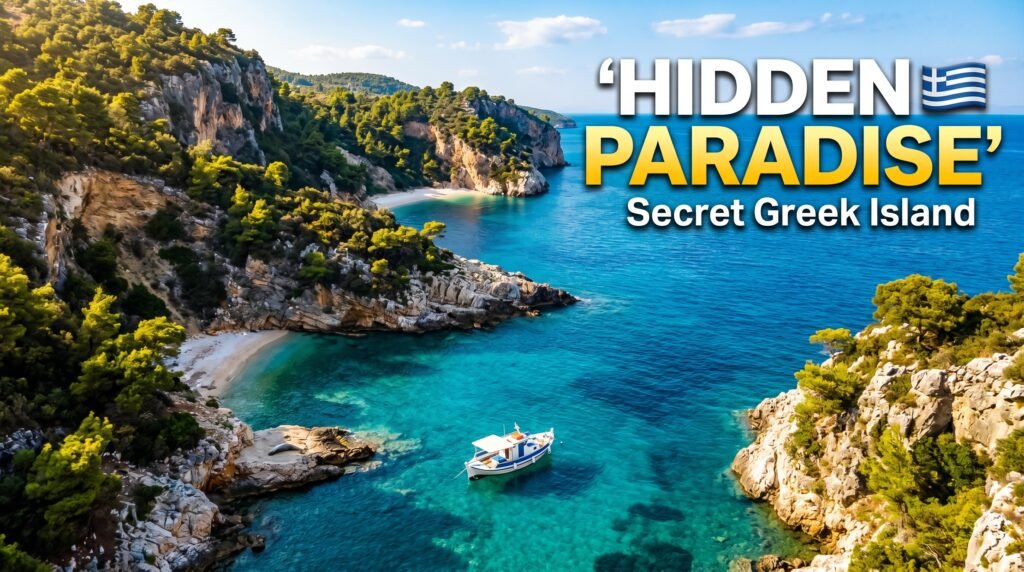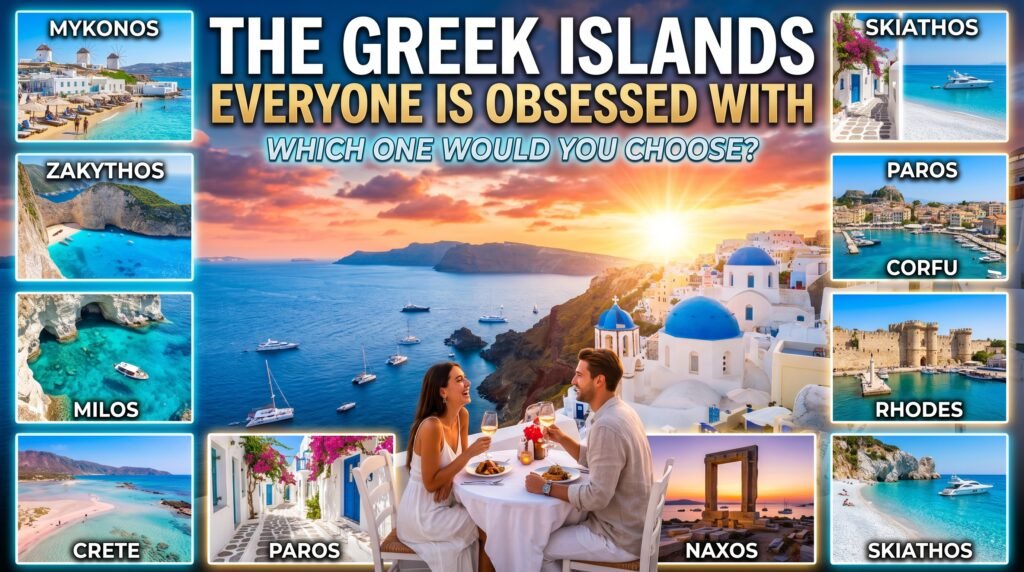
Best Islands to Visit in Greece : I still remember standing on the rim of Oia at dusk, the sea a shade of blue I’d never seen outside of a screensaver, and thinking — why did I wait so long? If you’re staring at a map of Greece right now trying to figure out which islands are actually worth your vacation days, you’re in exactly the right place.
Here’s the honest truth: Greece has over 6,000 islands (about 227 inhabited), and travel blogs mostly recycle the same three names. This guide is different. I’ve broken it down island by island, season by season, dollar by dollar — so that by the time you finish reading, you’ll know exactly where to go, when to book, and what rookie mistakes to skip entirely.
✈️ Best Travel Deals
Whether you’re hunting for the best islands to visit in Greece for couples, planning your first solo adventure, or trying to do Greece on a real American budget, this is the guide I wish I’d had.
 34 Expert Caribbean Cruise Tips Every Cruiser Should Know Before You Set Sail
 Eastern vs. Western Caribbean Cruise: Which One Is Actually Right for You?
 Best Anniversary Trips in the USA: 15 Unforgettable Destinations That’ll Make You Fall in Love All Over Again
 Top 10 Places to Visit in the World That Will Ruin Every Other Trip (In the Best Way)
Quick Facts About Greece
| Detail | Info |
|---|---|
| Country | Greece (Hellenic Republic) |
| Capital | Athens |
| Languages | Greek (English widely spoken in tourist areas) |
| Currency | Euro (€) — Budget approx. $1.08 per €1 USD (check live rates) |
| Time Zone | EET / EEST (UTC+2 / UTC+3 in summer) |
| Visa for Americans | No visa required for stays under 90 days |
| Best Duration | 10–14 days for a proper island-hopping trip |
| Getting There | Fly into Athens (ATH) or Thessaloniki (SKG); ferries connect islands |
Why Greece’s Islands Stopped Me In My Tracks
Most Americans land in Athens, do the Acropolis, and then fly home thinking they’ve “done Greece.” That’s like going to New York City, seeing Times Square, and calling it a trip.
The Greek islands are where the country truly lives. Every island has its own personality — its own dialect of beauty, its own rhythm of life, its own reason to stay longer than you planned. I’ve watched the sun melt into the Caldera in Santorini, gotten lost in old-town alleyways in Rhodes, and eaten the freshest grilled octopus of my life sitting on a plastic chair in Naxos while a fisherman repaired his net ten feet away.
No AI can replicate that. No hotel brochure either.
The Greek islands reward the curious traveler. The ones who ask the hotel owner for the restaurant she actually goes to on her nights off. The ones who take the ferry instead of the 45-minute flight. The ones who stay one day longer than planned — because they always should.
Best Time to Visit the Greek Islands
Timing your trip is genuinely one of the biggest decisions you’ll make. Go in July or August and you’re battling 95°F heat, $400/night rooms in Santorini, and crowds that make Disney World look quiet. Go in November and half the islands are shut down.
Here’s the real breakdown:
| Month / Season | Weather | Crowd Level | Best For |
|---|---|---|---|
| April – May | 68–77°F, sunny with a breeze | Low–Moderate | First-timers, couples, hikers, wildflower season |
| June | 80–86°F, reliably sunny | Moderate | Beach lovers, reasonable prices, fewer crowds |
| July – August | 88–100°F+, hot and dry | Very High (peak) | Nightlife, festivals, beach parties (budget extra $$$) |
| September | 82–88°F, warm sea temps | Moderate–Low | Best overall balance — warm, affordable, manageable crowds |
| October | 70–78°F, occasional rain | Low | Budget travelers, photographers, foodies, quiet village vibes |
| November – March | 50–60°F, rainy | Very Low | Off-season Athens exploration; most islands effectively closed |
My honest recommendation: If you can swing it, go in late May or early September. The sea is warm, the light is golden, the prices are 30–40% lower than peak, and you can actually get a table at the good restaurants without a reservation made three months in advance.
The best islands to visit in Greece in September are practically all of them — it’s the sweet spot the locals know about and most Americans miss.
🏠 Best Hotels & Accommodation
The Best Islands to Visit in Greece — All 15 Ranked and Explained
Let’s get into it. I’m not going to just say “Santorini and Mykonos” and call it a day. Here are 15 islands worth your serious consideration, with honest notes on who each one is right for.
34 Expert Caribbean Cruise Tips Every Cruiser Should Know Before You Set Sail
Eastern vs. Western Caribbean Cruise: Which One Is Actually Right for You?
Best Anniversary Trips in the USA: 15 Unforgettable Destinations That’ll Make You Fall in Love All Over Again
Top 10 Places to Visit in the World That Will Ruin Every Other Trip (In the Best Way)
1. Santorini — The Icon That Lives Up to Its Reputation (Mostly)
Best for: Couples, honeymooners, photographers, first-timers
Santorini — officially called Thira — is the most photographed island in Greece, and yes, those blue-domed churches in Oia are exactly as stunning in person. The island sits on the edge of a volcanic caldera, which gives it that dramatic cliff-face geography you see plastered on every travel Instagram account.
Here’s what most blogs won’t tell you: Santorini is worth it, but only if you plan smart. In July and August, the 900-person donkey path up from the old port gets so packed it becomes a hazard. The “famous” sunset spot in Oia turns into a standing-room-only mob.
Go in May or October instead. The cliffside village of Oia glows in the late afternoon light and you might share the best viewpoints with only a handful of other people. I found a spot just past the Oia Castle ruins — most tourists stop before it — and had a 20-minute window of near-solitude at golden hour that I will genuinely never forget.
Don’t miss:
- Akrotiri Archaeological Site (a Minoan city preserved like Pompeii — criminally undervisited)
- Red Beach and White Beach near Akrotiri
- A sunset catamaran cruise around the caldera ($80–$120/person, worth every cent)
- Wine tasting at Santo Wines overlooking the caldera
Getting there from Athens: 45-minute flight or 7–8 hour high-speed ferry from Piraeus port (~$45–$80 ferry, $60–$150 flight)
2. Mykonos — Europe’s Party Island (Know What You’re Signing Up For)
Best for: Nightlife lovers, LGBTQ+ travelers, beach club scene, social butterflies
Mykonos has a reputation, and it deserves it. This island is genuinely one of the most electric nightlife destinations in the world. Super Paradise Beach, Paradise Beach, and the clubs of Mykonos Town (the Chora) run until sunrise — literally.
But here’s what surprises people: Mykonos Town itself is gorgeous. The labyrinthine white-washed alleys, the famous row of windmills overlooking the harbor, and the pelicans wandering through the streets give it a charm that exists separate from the party scene.
Is Mykonos or Santorini better? They’re almost incomparable. Santorini wins on scenery and romance. Mykonos wins on energy and beaches. If you can only pick one as a first-timer, Santorini edges it out for pure “I can’t believe I’m here” impact. But if you’re going with a group in your 20s or 30s, Mykonos hits different.
Budget reality check: Mykonos is expensive. A beer at a beach club runs $15–$18. Budget $250–$400/day if you want to participate in the full experience.
3. Crete — Greece’s Largest Island and Most Underrated
Best for: History buffs, foodies, hikers, families, anyone who wants variety in one destination
Crete is a destination unto itself — Greece’s largest island and, in my opinion, one of the most complete travel experiences in the entire Mediterranean. It has ancient Minoan ruins at Knossos Palace, Europe’s longest gorge (Samaria Gorge), mountain villages that feel untouched by tourism, and some of the best food you’ll eat anywhere in Greece.
✈️ Best Travel Deals
The north coast (Heraklion, Chania, Rethymno) has the infrastructure and tourism. The south coast is rugged, dramatic, and rewarding for those willing to rent a car and explore.
Chania Old Town is arguably one of the most beautiful cities in Greece — Venetian harbor, Ottoman mosques converted into restaurants, backstreets full of local artisans. I’d put it above Santorini for pure “walk until you’re happily lost” pleasure.
🏠 Best Hotels & Accommodation
Which is nicer, Crete or Corfu? Crete wins on historical depth and food. Corfu wins on lush green scenery and Venetian architecture. They’re different flavors of wonderful — but for a first-timer wanting maximum variety, Crete is the stronger single-island choice.
4. Rhodes — Where Medieval History Meets Mediterranean Beaches
Best for: History lovers, families, couples, beach-and-culture combo seekers
Rhodes doesn’t get the Instagram love it deserves, and that’s precisely why I love it. The Old Town of Rhodes is a UNESCO World Heritage Site — a fully intact medieval walled city, the largest inhabited medieval town in Europe, complete with cobblestone streets, a knights’ palace, and Byzantine churches.
Walk through the Street of the Knights at 7 a.m. before the day-trippers arrive and it feels like you’ve stepped into a film set.
Beyond history, Rhodes has gorgeous beaches: Tsambika Beach for families, Anthony Quinn Bay for snorkeling, and Prasonisi at the southern tip where two seas meet and windsurfers from all over the world gather.
Which is better, Corfu or Rhodes? If beaches and history are your priority, Rhodes. If Venetian elegance and lush mountain scenery call to you, Corfu.
5. Corfu — The Green Island With Old-World European Charm
Best for: Nature lovers, architecture fans, romantic couples, wine and food travelers
Corfu (Kerkyra) is the most distinctly un-Greek-looking Greek island, and that’s a compliment. Centuries of Venetian, French, and British rule gave it a unique architectural character — pastel townhouses, French-style arcades, and cricket on the esplanade (yes, really).
Corfu Town is one of the few Greek island capitals with a genuine year-round cultural heartbeat. The old fort, the Liston promenade modeled on Paris’s Rue de Rivoli, and the Orthodox Spianada Square all make for incredible afternoon wandering.
The island is also exceptionally green — olive groves, cypress trees, and wild herbs cover the hillsides in a way that makes it feel more like Tuscany than the Aegean.
Which is nicer, Corfu or Santorini? Different planets, honestly. Santorini gives you the dramatic volcanic drama. Corfu gives you European elegance wrapped in Mediterranean warmth. For romance, Santorini edges ahead. For a slower, more cultured escape, Corfu is extraordinary.
6. Naxos — The Best Island You’re Probably Skipping
Best for: Budget travelers, families, foodies, beach lovers who hate crowds
Naxos is my personal dark horse pick and one of the most underrated Greek islands in the entire Aegean. It’s bigger than Mykonos and Santorini combined, self-sufficient (it actually produces its own food, unlike most islands), and has beaches that rival anything in the Cyclades — without the insane prices.
Agios Prokopios Beach and Plaka Beach are among the most beautiful stretches of sand I’ve ever walked. Crystal clear water, firm white sand, and you can rent a sunbed for $8 instead of $40.
The interior of Naxos hides mountain villages, Byzantine churches, and the ancient marble quarries where partially-finished colossal statues (kouroi) were abandoned 2,500 years ago and remain lying in the hillside to this day.
Is Paros or Milos better? Milos beats both for jaw-dropping scenery (those sea caves are otherworldly). Paros is more polished and easier to get around. Naxos beats all three for overall value and variety.
7. Milos — The Most Visually Dramatic Island in Greece
Best for: Photographers, adventurers, beach connoisseurs, couples seeking something off the beaten path
Milos is what happens when a volcanic island meets the most impossibly colored water on Earth. The famous Sarakiniko Beach — white lunar rock formations tumbling into electric blue water — looks like something NASA photographed on another planet. You’ve seen the photos. Believe them.
✈️ Best Travel Deals
Kleftiko, accessible only by boat, is a sea cave labyrinth where the water shifts between turquoise and jade. A full-day boat tour (~$60–$80/person) visits Kleftiko, multiple sea caves, and secluded coves — it’s the best single day I’ve spent in the Greek islands.
Milos is gaining popularity fast, so go sooner rather than later. It’s still manageable in June and September, but July–August is increasingly crowded.
8. Paros — The Cyclades’ Most Balanced Island
Best for: First-timers to the Cyclades, windsurfers, village explorers, anyone wanting Santorini vibes without Santorini prices
Paros sits right in the heart of the Cyclades and serves as the perfect base for island-hopping. The ferry connections are excellent — you can day-trip to Naxos, Antiparos, or Milos without trouble.
Naoussa in the north is a postcard-perfect fishing village with whitewashed walls, bougainvillea, and a harbor full of wooden boats. Parikia (the capital) has a 6th-century Byzantine church built with marble from 500-year-old pagan temples.
Golden Beach draws windsurfers from around the world. The consistent meltemi winds in summer make it one of Europe’s top windsurfing spots.
9. Zakynthos — Turtles, Shipwrecks, and Turquoise Water
Best for: Nature lovers, snorkelers, couples, travelers wanting that “wow” beach moment
Zakynthos (Zante) has Navagio Beach (Shipwreck Beach) — widely considered one of the most photographed beaches in the world. A rusting shipwreck sits on white pebbles in a cove so perfectly enclosed by white limestone cliffs that the water inside turns an impossible shade of turquoise.
You can only reach it by boat. Go early morning (before 10 a.m.) to get the famous view from the clifftop overlook with minimal crowds.
Zakynthos is also a nesting ground for loggerhead sea turtles (Caretta caretta). The protected bays at Laganas and Gerakas give you a genuine chance to see sea turtles in the wild — a rare bucket-list experience for families with kids.
10. Lefkada — The Ionian Gem Connected to the Mainland
Best for: Road-trippers, beach lovers, budget travelers, kitesurfers
Lefkada is technically an island but connected to the Greek mainland by a short causeway — meaning you can drive here from Athens (about 5 hours) and skip the ferry entirely. That alone makes it uniquely accessible for Americans renting a car.
Porto Katsiki Beach and Egremni Beach on the west coast regularly rank among the top five beaches in Greece — sheer white cliffs, deep turquoise water, almost no development. Porto Katsiki is accessible by a long staircase. Egremni requires a boat or a serious hike.
Vasiliki in the south is one of Europe’s top windsurfing and kitesurfing destinations.
11. Samos — Pythagoras’s Island and Wine Country
Best for: History buffs, wine lovers, hikers, travelers wanting an authentic non-touristy feel
Samos sits just off the Turkish coast and was the birthplace of Pythagoras and Epicurus. It has a UNESCO-listed ancient site (the Heraion of Samos), a 1,000-meter engineering marvel from antiquity (the Eupalinos Tunnel), and a sweet Muscat wine that Napoleon famously loved.
Most Americans skip Samos entirely. That’s their loss and your gain — the island is lush, the beaches are uncrowded, and the local prices are refreshingly honest.
12. Hydra — The Car-Free Island That Feels Like 1950
Best for: Artists, romantics, weekend escapees from Athens, couples, writers
Hydra bans cars, motorcycles, and even bicycles. Everything moves by donkey, foot, or boat. The harbor is lined with stone mansions from the 18th century. There are no chain restaurants, no neon signs, no souvenir shops with cheap plastic Parthenons.
Just 90 minutes from Athens by hydrofoil ($50 round trip), Hydra is the easiest day trip or weekend escape in Greece. Stay overnight after the day-trippers leave and the island transforms into something genuinely quiet and beautiful.
13. Ikaria — The Island Where People Forget to Die
Best for: Wellness travelers, adventurers, slow travelers, authenticity seekers
Ikaria is one of the world’s five Blue Zones — places where people regularly live past 100. The island is known for late-night communal feasting (panigiri festivals run until 4 a.m.), organic food, and an almost philosophical disregard for schedules.
It’s not for everyone. Ikaria has minimal tourist infrastructure and the roads are comically winding. But if you want a genuine glimpse into old Greek island life — the kind that hasn’t been shaped by Instagram — Ikaria is extraordinary.
14. Kefalonia — The Ionian’s Most Dramatic Landscape
Best for: Nature lovers, hikers, Captain Corelli fans, divers
Kefalonia was immortalized in Captain Corelli’s Mandolin and its landscapes live up to that romantic reputation. Myrtos Beach — white pebbles, turquoise water, framed by sheer grey cliffs — is genuinely one of the most dramatic beaches in Europe.
The Melissani Cave is an underground lake lit by a hole in the ceiling, where the light refracts through the turquoise water in a way that photographs cannot do justice.
Kefalonia also has great local wine (Robola), diverse hiking trails on Mount Ainos, and none of the overwhelming tourist infrastructure of Santorini or Mykonos.
15. Thessaly’s Sporades: Skiathos, Skopelos & Alonissos
Best for: Green scenery lovers, sailing fans, ABBA movie fans, nature reserves
This trio of northern Aegean islands — the Sporades — offer something genuinely different: dense pine forests that run right down to turquoise beaches. Skiathos has the nightlife and the beaches (Koukounaries is world-class). Skopelos is famous as the filming location for Mamma Mia. Alonissos is home to Greece’s first marine national park and monk seal sightings.
If you’ve been to the Cyclades and want something greener, softer, and more like a Mediterranean forest fantasy, the Sporades deliver.
Where to Stay, Eat, and Get Around
Where to Stay
Budget ($60–$100/night): Guesthouses and small family-run pensions on Naxos, Paros, Samos, and Crete offer incredible value. Look for the word pansion — it’s the Greek equivalent of a B&B and usually includes a homemade breakfast.
Mid-range ($100–$200/night): Boutique hotels in Nafplio (mainland), Chania Old Town (Crete), and the villages of Paros and Milos. These hit the sweet spot of character + comfort.
Splurge ($300–$800+/night): Santorini cave hotels (Imerovigli, Fira, Oia) and Mykonos villas. You get that cliffside infinity pool, but budget accordingly.
Where to Eat
Skip any restaurant with a laminated photo menu and a guy standing outside trying to wave you in. Those are tourist traps.
Find the places with handwritten chalkboard menus, mostly Greek customers, and no English translation on the sign out front. Order the daily fish, the local cheese (graviera in Crete, arseniko in Naxos), and whatever the owner suggests.
Greek island eating essentials:
- Saganaki — fried cheese, get it everywhere
- Fresh grilled octopus — not from frozen; ask if it’s fresh (fresko)
- Dakos — Cretan rusk with tomato and mizithra cheese; it’s what a bruschetta aspires to be
- Local wine — Assyrtiko from Santorini, Muscat from Samos, Robola from Kefalonia
Getting Around the Islands
By Ferry: The backbone of Greek island travel. Ferryhopper and Direct Ferries let you compare routes and book in advance. Book ahead in July–August — ferries sell out.
How long is a ferry ride from Mykonos to Santorini? On a high-speed catamaran, about 2–3 hours. On a slower regular ferry, 4–5 hours. The fast ferry is worth the extra $10–$15 for that route.
By Flight: Island-hopping by domestic flight (Olympic Air, Aegean Airlines) is faster but pricier. Makes sense if you’re short on time and need to cover large distances.
By Rental Car or ATV: Essential on larger islands like Crete, Rhodes, and Kefalonia. ATVs and scooters work fine on smaller islands. International Driving Permit recommended (get one from AAA before you leave home for ~$20).
Pro Tips and Common Tourist Mistakes to Avoid
These are the things nobody tells Americans before their first Greek island trip:
Don’t flush toilet paper. This sounds bizarre but it’s real — the plumbing in most Greek islands can’t handle it. There will be a small bin next to the toilet. Use it.
Don’t underestimate the meltemi wind. This strong northern wind hits the Cyclades hard in July–August. It makes certain ferry routes rough and can ground your beach day unexpectedly. Check wind forecasts (Windy.com is your friend).
Don’t book only Santorini and Mykonos. These are phenomenal, but if that’s your whole Greece trip, you’ve missed 98% of the country. Combine at least one less-touristy island — Naxos, Milos, Crete, or Samos — with your flagship stops.
Don’t ignore the afternoon siesta culture. Many local shops close from roughly 2–5 p.m. and reopen in the evening. If you want to buy anything from a non-tourist shop, plan accordingly.
Do carry cash. While credit cards work in tourist areas, village tavernas, small ferries, and local markets often run cash-only. Have €100–€200 in bills on you at all times.
Do learn three Greek phrases. Kalimera (good morning), Efharisto (thank you), and Sygnomi (excuse me/sorry). Greek islanders respond to this with a warmth that is immediate and genuine.
Can girls wear shorts in Greece? Absolutely — Greece is a modern, welcoming country and shorts are completely normal on islands and in cities. The only exception is when entering Orthodox churches, where women are expected to cover their shoulders and knees. A sarong or light scarf in your bag solves this instantly.
What’s the one travel tip you swear by for European island trips? Drop it in the comments — I read every single one.
Budget Breakdown and What To Actually Expect To Spend
Here’s the honest American-to-Euro math, based on my own spending across multiple trips.
| Expense | Budget Traveler | Mid-Range | Splurge |
|---|---|---|---|
| Accommodation (per night) | $55–$90 | $100–$200 | $300–$800+ |
| Meals (per day) | $25–$35 | $50–$80 | $100–$200 |
| Inter-island Ferry | $25–$45 | $45–$90 | $90–$150 (fast catamaran) |
| Day Tours / Activities | $0–$30 | $40–$80 | $80–$200+ |
| Local Transport | $10–$20/day | $25–$45/day | $50–$100/day (private taxi/car) |
| Daily Total Estimate | $100–$150 | $200–$350 | $500–$1,200+ |
Flights from the US: Round-trip from New York (JFK) to Athens (ATH) typically runs $600–$900 in shoulder season and $900–$1,400 in peak summer. Book 3–5 months ahead for best fares. Use Google Flights with the price calendar view and set alerts.
What is the cheapest Greek island to visit? For overall value: Naxos, Ikaria, and Samos consistently come out cheapest. They have lower accommodation prices, local restaurants that don’t gouge tourists, and fewer activities requiring entry fees.
Where do millionaires go in Greece? Private villa charters in Mykonos, the luxury resorts of Porto Heli on the Peloponnese, and the exclusive Amanzoe hotel. For islands, Antiparos has long been a celebrity retreat (Tom Hanks has a home there).
How to Plan Your Greek Island Itinerary
Sample 10-Day First-Timer Itinerary
Day 1–2: Athens Arrive, recover from jet lag, see the Acropolis and Acropolis Museum. Dinner in Monastiraki or Psyrri neighborhoods. Take the metro to Piraeus port for your ferry.
Day 3–5: Santorini Ferry from Athens (~8 hours, take the overnight) — arrive fresh. Two full days on the island: Oia at sunrise (5:45 a.m. — you will be nearly alone), Akrotiri ruins, Red Beach, and that sunset catamaran cruise.
Day 6–7: Naxos Fast ferry from Santorini (~1.5 hours, ~$30). Two days of beach-and-village life. Rent an ATV and drive to the kouros statues and mountain village of Apeiranthos. Eat grilled fish at the harbor in Naxos Town for under $20 a plate.
Day 8–9: Mykonos Fast ferry from Naxos (~45 minutes). See the windmills and old town in the morning, hit the beach in the afternoon, experience the nightlife (or don’t — your call).
Day 10: Return to Athens Ferry or flight back. If your flight home is the next day, spend your last evening in Thissio neighborhood with an Acropolis view dinner.
Best Islands to Visit in Greece from Athens
If you’re based in Athens and doing day trips or short extensions:
- Hydra — 90 mins by hydrofoil ($50 round trip)
- Aegina — 1 hour by ferry ($15 round trip) — pistachio farms and an intact Doric temple
- Spetses — 2 hours, car-free, pine-fringed beaches
FAQ: Real Questions Real Travelers Ask
What is the nicest island in Greece to visit?
Santorini earns the top spot for sheer visual drama and that unmistakable Aegean atmosphere, especially if you go in May or October. But “nicest” is personal — for food and history lovers, Crete is more rewarding; for raw natural beauty, Milos makes a strong case.What are the top five islands to visit in Greece?
For most travelers: Santorini, Crete, Mykonos, Rhodes, and Naxos. That combination covers romance, history, nightlife, medieval culture, and authentic local life respectively. Add Milos if you’re prioritizing beaches and photography.Is Mykonos or Santorini better?
Depends entirely on what you want. Santorini wins for scenery, romance, and the caldera experience. Mykonos wins for beach clubs, nightlife, and social energy. For a honeymoon, Santorini. For a group trip in your 30s, Mykonos. If you have 10+ days, do both.Which Greek island should first-timers visit?
Santorini and Crete together make the ideal first-timer combination. Santorini gives you the iconic Cycladic experience. Crete shows you the historical depth, diverse landscapes, and food culture that makes Greece so much more than a pretty postcard.What is the best month to visit Greece?
May and September are the sweet spots. The weather is excellent (75–85°F), the sea is warm enough to swim, crowds are manageable, and prices are 30–40% lower than July–August peak. Late September into early October is particularly magical for those who prefer quieter destinations.Which is the most popular Greek island?
Santorini and Mykonos trade the top spot for most visitors annually, but **Crete** actually receives more total tourists due to its size and variety of resorts. Rhodes comes in close behind Mykonos for popularity among European visitors.What are the most underrated Greek islands?
Milos, Naxos, Samos, Ikaria, and Lefkada all deserve far more attention than they get. Each offers something genuinely spectacular — sea caves, mountain villages, ancient ruins, pristine beaches — without the overcrowding and premium pricing of the headline islands.How do I decide which Greek island to visit?
Start with your top priority. History and culture → Rhodes or Crete. Romance → Santorini. Party and beaches → Mykonos. Nature and photography → Milos. Local authenticity → Naxos or Ikaria. Budget → Naxos, Lefkada, or Samos. Duration matters too: if you have under 5 days, pick one island and go deep rather than island-hopping too fast.Greek Islands to Be Cautious About
No guide is complete without a word of honesty. There are a handful of situations to approach with eyes open:
Over-touristified zones in peak season: The harbor area of Oia in August is so crowded it becomes unpleasant. The “famous” sunset there is shared with thousands of people. Go in May or visit the lesser-known village of Imerovigli for a comparable view with a fraction of the crowd.
Faliraki in Rhodes: This resort strip caters to the European spring break crowd — cheap shots, nightclubs, and package tourism. If that’s your scene, go for it. If not, stay in Rhodes Old Town or the quieter north coast villages instead.
Ios in July–August: Beautiful island, but it has historically been a hard-partying destination for young European travelers. If you want peace and quiet in peak season, skip it.
Travel Safety and Health
Greece is genuinely one of the safest countries for American travelers. The U.S. State Department maintains a Greece travel advisory page that is currently at Level 1 (exercise normal precautions) — the safest possible rating.
Petty theft (pickpocketing) exists in busy tourist areas of Athens and the main ports. Standard precautions apply: use a crossbody bag, don’t leave valuables on the beach unattended, and keep copies of your passport separate from the original.
For health considerations before traveling to Greece, including any vaccination recommendations, the CDC Travelers’ Health page for Greece is the most reliable American resource.
Travel insurance is genuinely worth buying for a Greek island trip. Ferry delays and missed connections are a real possibility in summer, and medical coverage is always smart abroad. Check providers like Allianz, World Nomads, or your credit card’s built-in travel protection before you leave.
Final Thoughts: Which Islands Are Actually Worth Your Time?
Here’s my honest short answer for the most common trip lengths:
5 days: Santorini + one day on Naxos or Crete 7–10 days: Santorini → Naxos → Milos (or swap Milos for Mykonos depending on your vibe) 12–14 days: Athens (2 days) → Santorini (3 days) → Naxos (2 days) → Mykonos (2 days) → Crete (3 days)
The Greek islands reward the traveler who slows down. Every island has a version of the same magic — blue water, warm people, ancient stones, incredible food — but each one delivers it differently. Trust your instincts, build in one day of buffer time (ferries get delayed, you’ll want to stay longer somewhere), and go with enough open time that a spontaneous recommendation from a local can actually be acted on.
The best Greek island is the one you haven’t left yet. You’ll understand that the moment you’re sitting at a harbor taverna at 10 p.m., the water reflecting the lights of the fishing boats, with no particular reason to be anywhere else.
For more destination guides, travel planning resources, and island-hopping itineraries built for American travelers, visit World Fusion Tours.
Have you been to the Greek islands? Which one surprised you most? Tell me in the comments — I’d genuinely love to know which island stole your heart.
References:
- U.S. State Department Greece Travel Advisory: travel.state.gov
- CDC Traveler Health — Greece: wwwnc.cdc.gov